A boiler rarely gives up on a mild spring afternoon when you have time to think about quotes. It usually fails on the coldest week of the year, when the house is freezing, the hot water has gone, and everyone wants it fixed now. If you are wondering when replacing an old boiler is the right move, the honest answer is this – before it turns into an emergency.
For some homes, that means replacing a boiler that is still running but costing too much to keep alive. For others, it means holding off a little longer because a repair is still sensible. The right time depends on age, reliability, efficiency and what the boiler is doing now, not just whether it can still fire up.
When to replace an old boiler
If your boiler is around 10 to 15 years old, needs frequent repairs, struggles to heat the house properly, or parts are becoming difficult to source, replacement starts to make more sense than patching it up. A modern boiler is usually more efficient, more reliable and easier to control, especially when paired with a smart thermostat.
That said, age on its own is not the whole story. Some older boilers keep going with regular servicing and only the occasional minor fix. Others become a money pit at eight or nine years old because they have been poorly maintained or heavily used. What matters is the pattern.
If you are calling an engineer every few months, topping up pressure repeatedly, noticing odd noises, or losing heating and hot water at awkward times, your boiler is telling you something. At that point, you are not just paying for repairs. You are paying in stress, disruption and uncertainty.
The signs your old boiler is on borrowed time
A failing boiler is not always dramatic. Quite often, the warning signs build slowly.
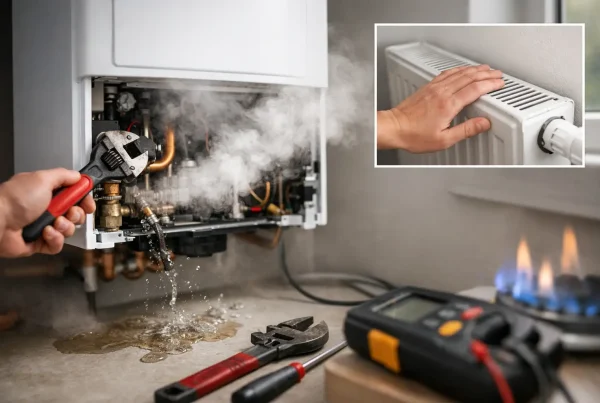
Your heating may take longer to warm up. Radiators may stay lukewarm even after bleeding. Hot water may fluctuate between warm and cold. The boiler may start making banging, whistling or gurgling sounds. You might spot leaks, fault codes, or pressure drops that keep returning.
Another common sign is rising energy bills without a clear reason. If your usage has not changed much but the cost of heating the house keeps creeping up, an ageing boiler could be working harder than it should. Older models are simply less efficient than newer ones, and wear over time makes that worse.
Then there is the issue of parts. Once a boiler reaches a certain age, some components become obsolete or expensive to source. Even if the fault itself is not major, the repair can become poor value if the part is hard to get hold of.
Repair or replace – what actually makes financial sense?
This is where plenty of homeowners and landlords get stuck. A repair is usually cheaper than a new boiler in the short term, so it can feel like the sensible option. Sometimes it is. But not always.
If the repair is minor and the boiler has otherwise been reliable, fixing it is often the right call. A straightforward component replacement on a boiler with years left in it is very different from spending more money on a unit that is already near the end.
A useful way to look at it is total cost over the next couple of years, not just today’s invoice. If you pay for one repair now, another in six months, and a third next winter, the numbers start to stack up quickly. Add in higher running costs and the inconvenience of repeat breakdowns, and replacement can work out better value.
Landlords in particular tend to take a practical view here. If a boiler is unreliable, tenants are unhappy, emergency callouts become more likely, and compliance checks can become more stressful. Replacing at the right time often protects the property as much as the budget.
Boiler age matters – but condition matters more
People often ask for a simple rule such as replacing a boiler at 12 years or 15 years. That would be easier, but real life is messier.
A well-maintained boiler that has been serviced every year may still be in decent shape beyond the average lifespan. A neglected boiler can be a constant problem much earlier. Installation quality matters too. If the original setup was poor, the system may have had issues from day one.
That is why a proper assessment matters. An engineer can tell you whether the fault is isolated or part of a wider pattern. They can also look at system cleanliness, controls, pressure issues and wear on key components. Sometimes the boiler is the main problem. Sometimes the wider heating system is making the boiler work harder than it should.
When an old boiler becomes a safety concern
Most boiler problems are about reliability or efficiency, but safety should never be overlooked. If there are signs of flue issues, poor combustion, recurring shutdowns or concerns about carbon monoxide, do not wait and see. Get it checked straight away by a Gas Safe engineer.
Even where there is no immediate danger, an old boiler in poor condition should not be ignored. Annual servicing helps catch issues early, but if the appliance is deteriorating and no longer operating as it should, replacement is often the safer long-term option.
For landlords, this matters even more. You have a legal duty to keep petrol appliances safe, and an unreliable boiler can quickly become more than just a maintenance nuisance.
The best time of year to replace a boiler
If you have a choice, do not wait until the middle of winter. The best time to replace an old boiler is usually before peak heating season, when you can plan the work properly instead of rushing into it during a breakdown.
Autumn is often ideal. You can get the installation sorted before the cold weather arrives, test the system properly, and avoid the stress of emergency decisions. Spring and summer can also be sensible times if your current boiler is showing clear signs of decline.
Of course, many people only act when the boiler finally stops. That is understandable. But emergency replacement limits your options. You are under pressure, you need heat restored quickly, and you may end up spending more than you would have with a planned installation.
Modern boilers offer more than just heat
Replacing an old boiler is not only about avoiding faults. It is also about improving how your home runs day to day.
Newer boilers are more efficient, quieter and easier to control. They work better with modern thermostats and heating controls, which helps you manage comfort and energy use more effectively. In many homes, that means more even heating, quicker hot water and fewer temperature swings.
You may also find that a new installation helps solve issues that have been blamed on the old boiler for years. Poor controls, sludge in the system, tired radiators or an inadequate filter can all affect performance. A good installation looks at the whole setup, not just the box on the wall.
Should you replace before it breaks down?
In many cases, yes. If the boiler is old, unreliable and showing multiple warning signs, replacing it before complete failure is usually the least stressful option.
This is especially true if you have children at home, vulnerable family members, tenants in the property, or a busy household that cannot be without heating and hot water. Waiting for a total breakdown might save money for a few months, but it can also create a far bigger problem at the worst possible time.
That does not mean every ageing boiler needs replacing immediately. If it is running well, passing annual service checks and not costing you in repeated repairs, keeping it going can still be reasonable. The key is to make the decision based on evidence, not hope.
A practical way to decide
If you are unsure whether to repair or replace, ask for a clear assessment of the boiler’s condition, likely repair costs, expected lifespan and whether parts are still readily available. That gives you something solid to work from.
A dependable local firm like GasPlumb will tell you straight whether your boiler is worth repairing or whether replacement is the better option. That is what most people want – not a sales pitch, just an honest answer and a safe, reliable fix.
If your boiler is ageing but still working, now is the time to pay attention to the warning signs. Acting early can save money, prevent winter breakdowns and spare you the hassle of making a rushed decision with no heating. A boiler does not need to be completely dead before replacing it becomes the smart move.