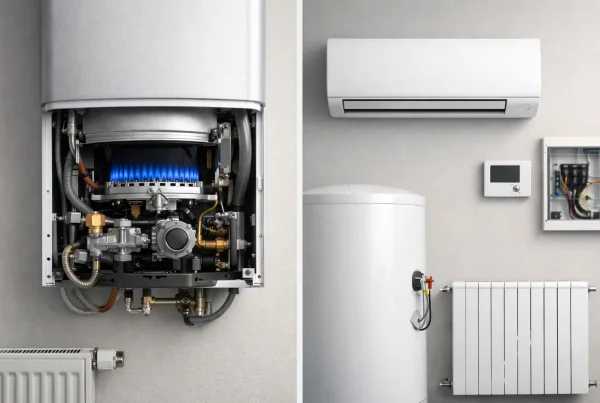
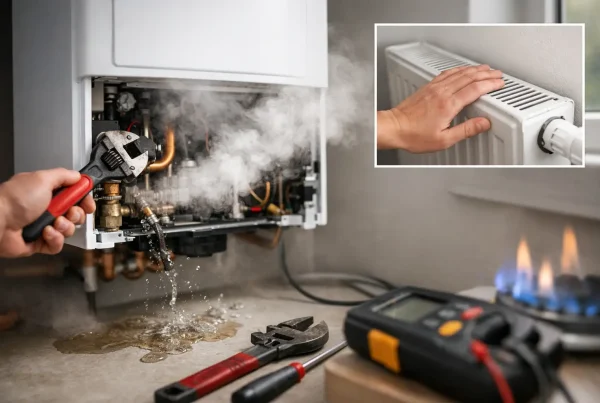
A boiler that stops working during a cold snap is often suffering from one simple issue: a frozen condensate pipe. A frozen condensate pipe fix can sometimes be handled safely at home, but only if you can reach the outside pipe easily and do not need to touch the boiler itself. The priority is to get heating and hot water back without causing a leak, damaging the pipework or putting yourself at risk.
Modern condensing boilers produce acidic wastewater called condensate. This normally runs through a small plastic pipe to an outside drain. When temperatures fall below freezing, water inside an exposed section of pipe can turn to ice and create a blockage. The boiler then shuts down as a safety measure.
Signs Your Condensate Pipe Has Frozen
The most common sign is a boiler that has stopped working when the weather turns very cold, often showing a fault code or a warning light. You may hear a gurgling sound from the boiler before it locks out. Some boilers display codes linked to the condensate system, but the exact code varies by manufacturer.
Take a look outside, if it is safe to do so. The condensate pipe is usually a narrow white, grey or black plastic pipe leading from the boiler or external wall to a drain. A section may be visibly frosted, bowed with ice, or covered in snow. If the pipe runs externally for a long distance, it is particularly likely to freeze.
Do not assume every boiler breakdown in winter is a frozen pipe. A loss of pressure, ignition fault, frozen mains water pipe or a problem with the boiler itself can produce similar symptoms. If you are unsure, or the pipe cannot be reached safely, arrange for a qualified engineer to check it.
Safe Frozen Condensate Pipe Fix at Home
Only attempt to thaw an external condensate pipe from ground level. Do not climb ladders, lean out of windows or work around a roofline in icy conditions. Never remove the boiler casing or interfere with any internal components.
Start by switching the boiler off at its controls. You can then warm the frozen part of the pipe gradually. A hot water bottle, a warm damp cloth, or a hairdryer on a low setting can work well. You can also pour warm water along the pipe using a jug or watering can.
The water must be warm, not boiling. Boiling water can crack plastic pipework, especially when it is already frozen and brittle. Work along the length of the exposed pipe rather than focusing on one spot. The blockage is not always where the ice is most obvious.
Once the pipe has thawed, dry the area around it and switch the boiler back on. You may need to reset it once, following the instructions for your particular boiler. If it fires up and remains running, the blockage has probably cleared.
Avoid using a naked flame, blowtorch, heat gun or sharp object to break the ice. These methods can damage the pipe, start a fire or cause a condensate leak. Condensate is not something to handle carelessly, so wash your hands if any water has escaped.
When to Stop and Call an Engineer
Stop if the pipe has cracked, come apart, or is leaking heavily. Also call for help if the boiler still will not reset after the pipe has been thawed, if the fault code returns, or if you cannot identify the correct pipe.
A blocked condensate pipe is usually straightforward to resolve, but a repeat lockout can point to poor pipe routing, inadequate insulation or another boiler fault. A Gas Safe engineer can confirm the cause and make sure the boiler is operating correctly before leaving you with a cold house again.
If you can smell gas at any point, do not attempt a repair. Turn off the gas supply if it is safe to do so, avoid electrical switches and call the gas emergency service straight away. A frozen condensate pipe does not normally cause a gas smell, so treat this as a separate urgent issue.
Why Your Boiler Shuts Down
Your boiler needs somewhere safe for condensate to go. If the pipe is blocked with ice, the condensate can back up towards the appliance. Rather than allowing water to build up inside the boiler, its safety controls shut the system down.
That shutdown is frustrating, especially when the house is cold, but it is doing its job. Repeatedly pressing reset without clearing the blockage is unlikely to solve the problem. It may also make it harder to spot an underlying fault if the boiler needs professional attention.
Older boilers may not have an external condensate pipe because they are not condensing models. Nearly all modern high-efficiency gas boilers do, which is why this is a common winter callout for homeowners and landlords.
Preventing Another Frozen Condensate Pipe
A quick thaw gets you running again, but prevention matters when temperatures are expected to stay low. The best solution depends on the pipe route, the length of exposed pipework and where it drains.
External pipework should be as short as practical, with a suitable fall towards the drain so water does not sit in the pipe. Where possible, condensate pipework is better routed internally before it reaches a suitable waste connection. If an external route is unavoidable, a larger-diameter pipe is less likely to freeze than a narrow one.
Proper weatherproof insulation also helps. Standard foam lagging may not be enough on a pipe exposed to wind, rain and prolonged frost. It needs to be secure, suitable for outdoor use and fitted without trapping water against the pipe.
During freezing weather, keeping the heating on at a low, steady temperature can reduce the risk of a condensate blockage and protect other pipework around the home. This is especially sensible for empty rental properties and homes left unattended for a few days. It costs something to maintain background heat, but it is often cheaper than an emergency repair and potential water damage.
Do not block or alter the pipe outlet yourself to stop it freezing. The condensate has to discharge correctly. Poor alterations can create drainage issues, leaks or a non-compliant installation.
Landlords: Act Before a Tenant Loses Heating
For landlords, a frozen condensate pipe is more than an inconvenience. A tenant without heating or hot water in winter needs a prompt response, and repeated boiler lockouts can quickly become a management problem.
Check the condensate route when arranging annual boiler servicing, particularly at properties with a history of winter breakdowns. An engineer can assess whether the pipe size, insulation and drainage route are suitable, then recommend a practical alteration if needed. This is often more useful than simply replacing insulation after every cold spell.
Keep clear instructions for the boiler model at the property too. Tenants should know how to identify a basic lockout, where the external pipe is located and when to call for help. They should not be expected to dismantle anything or work at height.
Get the Boiler Checked if the Problem Keeps Returning
One frozen pipe during an unusual cold snap may be unavoidable. Two or three lockouts in the same winter usually mean the installation needs attention. The pipe may be too small, poorly insulated, badly supported or running through an exposed area where it is bound to freeze.
GasPlumb can diagnose a boiler that has shut down, thaw and repair damaged condensate pipework, and advise on a longer-term fix for homes across Leeds. If the pipe has cleared but your boiler still will not run, it is worth getting it checked rather than spending another night hoping the reset button works.
A little preparation before the next frost can save a great deal of disruption. If your condensate pipe has frozen once, have its route and protection assessed while the problem is clear, not when your heating has failed again.