
A boiler rarely packs in at a convenient time. It tends to happen on a cold morning, before work, when the hot water has gone and the house is already cooling down. That is why knowing the top signs boiler needs replacing can save you stress, repeated repair costs and a full breakdown at the worst moment.
Some boiler problems are worth repairing. Others are a warning that you are throwing good money after bad. The trick is knowing the difference before you are left without heating or hot water.
Top signs boiler needs replacing rather than repairing
The clearest sign is frequency. If your boiler keeps breaking down, even after recent repairs, that usually points to wider wear across the system. One isolated fault is normal enough. A string of callouts over a year or two is a different story.
At that stage, the issue is not just the part that failed today. It is the condition of the boiler as a whole. Pumps, valves, fans and heat exchangers all age, and once several components start failing, repair bills can stack up quickly.
Another major sign is age. Many boilers will give good service for around 10 to 15 years if they have been properly maintained. Some last longer, but efficiency drops and parts become harder to source. If your boiler is past that sort of age and starting to play up, replacement is often the more sensible option.
There is also the question of reliability. Plenty of homeowners can put up with an older boiler that still works. What becomes harder to accept is a boiler you cannot trust. If you are constantly resetting it, listening for odd noises or wondering whether the heating will come on, that uncertainty is a sign in itself.
Rising energy bills with no clear reason
If your gas use seems to be climbing but your habits have not changed much, your boiler could be part of the problem. Older boilers tend to be less efficient than modern models, especially if they have not been serviced regularly or are starting to wear internally.
That does not mean every high bill means you need a new boiler. Poor insulation, thermostat settings and energy price changes all play a part. But if your bills are creeping up alongside repeated faults or uneven heating, it is worth looking at the boiler as the cause.
A struggling boiler has to work harder to deliver the same result. That extra effort often shows up in your monthly costs before it shows up as a full failure.
The heat is on, but the house still feels cold
One common complaint is that the heating is running for longer, but rooms do not feel as warm as they used to. In some homes, that turns out to be a balancing issue, sludge in the system or a thermostat problem. In others, the boiler is simply no longer performing properly.
When the unit cannot maintain heat efficiently, you get a house that takes longer to warm up and hot water that feels inconsistent. If the system has already been checked and the same problems keep returning, replacement may be the better long-term fix.
Strange noises are getting worse
Boilers are not silent, but they should not bang, whistle, gurgle or rumble loudly. Unusual noises can point to air in the system, low water pressure, pump issues or limescale build-up. Sometimes those faults can be repaired. Sometimes they are a sign that the internal condition of the boiler is deteriorating.
If the noise is new, getting louder or coming back soon after repair, take it seriously. It is often an early warning that the boiler is under strain.
Leaks, corrosion and visible wear
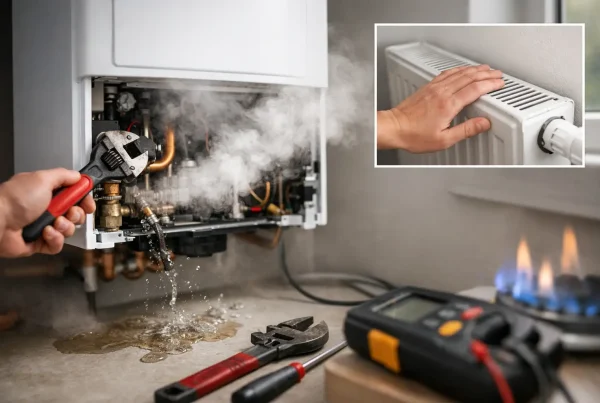
If you can see water around the boiler, rust on the casing or staining on nearby pipework, do not ignore it. A small leak might come from a seal or joint and be repairable. But corrosion is different. Once metal components start degrading, you are usually looking at a boiler that is well into its later years.
Visible wear matters because it tells you the problem is not hidden inside a single replaceable part. It suggests age, moisture damage or long-term stress on the system. In those cases, a repair may only buy you a bit of time.
Parts are hard to find or too expensive
This is one of the less obvious top signs boiler needs replacing, but it matters. If your engineer tells you the required part is obsolete, on long lead times or costly enough to make the repair poor value, replacement becomes the practical choice.
That is especially true with older or discontinued boiler models. You can sometimes source parts, but if each repair becomes a hunt for outdated components, you are likely to face the same problem again next time something fails.
A good rule is simple enough. If the repair bill is high and the boiler is already old, think beyond the immediate fault. Ask what shape the rest of the boiler is in and whether you are likely to face more costs soon after.
Your hot water keeps cutting out
Intermittent hot water is one of the most frustrating boiler problems in any home. If the shower keeps going cold, taps run hot then lukewarm, or you need to restart the boiler to get hot water back, something is wrong.
In some cases, this comes down to a valve, sensor or pressure issue. In others, it points to a boiler that is wearing out and no longer operating consistently. If these problems become regular, replacement may be more cost-effective than repeated fault finding.
For landlords, this matters even more. Ongoing hot water issues lead to complaints fast, and temporary fixes do not help much if the same breakdown keeps happening.
The flame looks wrong or the boiler has safety concerns
A healthy boiler flame should generally burn blue. If it looks yellow or orange, that can suggest incomplete combustion. Soot marks, burning smells or carbon monoxide alarm concerns should always be treated seriously and checked by a Gas Safe engineer straight away.
Not every safety issue means the boiler must be replaced, but some do. If a boiler is classed as unsafe, badly deteriorated or not economical to repair, replacing it is often the right move.
This is not an area for guesswork. If you suspect a gas or combustion problem, get it checked properly and do not keep using the appliance until you have clear advice.
When repair still makes sense
Not every fault means the boiler is finished. A newer boiler with a single failed part can often be repaired and carry on giving reliable service. The same applies if the boiler has a solid service history, good efficiency and no pattern of repeated issues.
It depends on age, condition and cost. A modest repair on a seven-year-old boiler is very different from a major repair on a 14-year-old one. The right decision is not always the cheapest today. It is the one that gives you the best value over the next few years.
A simple way to judge it
Ask yourself three things. How old is the boiler, how often is it failing, and how much confidence do you have in it now? If the answer is old, often and not much, replacement is usually the honest next step.
If the boiler is newer, the fault is isolated and the repair cost is reasonable, fixing it may be perfectly sensible. A decent engineer should tell you plainly which side of that line you are on.
Why waiting too long often costs more
A lot of people delay boiler replacement because they want to avoid the upfront cost. That is understandable. But waiting too long can mean paying for repeated repairs, higher running costs and emergency callouts, only to replace the boiler anyway a few months later.
There is also the disruption. Planned replacement is always easier than dealing with a full failure in winter. You get time to choose the right boiler, book the work properly and avoid the scramble that comes with an unexpected breakdown.
For homeowners and landlords alike, reliability matters as much as price. Heating and hot water are not optional for long.
If your boiler is showing several of these warning signs at once, do not keep hoping it will sort itself out. Get it assessed properly, weigh up repair against replacement, and make the decision before the boiler makes it for you.