
If you’re weighing up a combi boiler vs system boiler, the right choice usually comes down to one thing – how your home actually uses hot water day to day. A boiler that works well in a one-bathroom terrace can be the wrong fit for a busy family house with two showers, high demand and people rushing about every morning.
This is where plenty of homeowners get stuck. On paper, both options can heat your home well. In practice, they suit different properties, different routines and different expectations. If you’re replacing an old boiler, planning an upgrade or sorting a rental property, it pays to get this decision right before installation starts.
Combi boiler vs system boiler: the basic difference
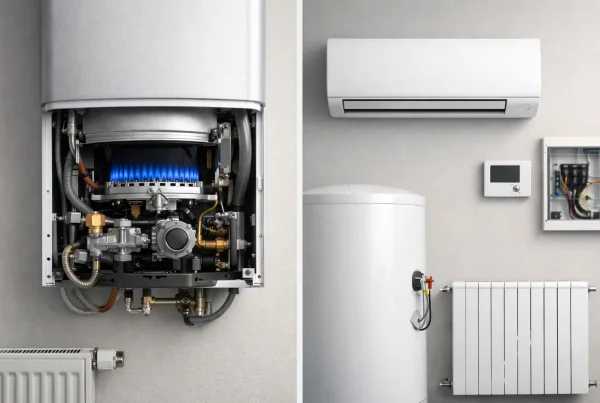
A combi boiler heats water directly from the mains as and when you need it. There is no separate hot water cylinder, which makes it a compact option for homes where space matters. Turn on a hot tap or shower, and the boiler gets to work straight away.
A system boiler works with a separate hot water cylinder. It still takes water from the mains, but instead of heating all hot water on demand, it stores a supply of hot water in the cylinder ready for use. That setup makes a big difference in homes where several people may need hot water around the same time.
Neither is automatically better. The better boiler is the one that matches the property and the people living in it.
When a combi boiler makes sense
A combi boiler is often the practical choice for smaller homes, flats and properties with one bathroom. If your household does not regularly run multiple showers or hot taps at the same time, a combi can be efficient, tidy and cost-effective.
The biggest advantage is space. Because there is no cylinder or cold water tank to think about, installation is usually simpler and the whole system takes up less room. That can be a real benefit in kitchens, utility areas and airing cupboards where every bit of storage counts.
Combi boilers can also be a good option if you want hot water on demand without waiting for a cylinder to reheat. For couples, smaller families or landlords fitting out a standard rental property, that straightforward setup often ticks the right boxes.
There is a trade-off, though. A combi boiler can struggle if hot water demand is high. If someone is in the shower and another person turns on the kitchen tap, you may notice a drop in pressure or temperature. In homes with more than one bathroom, that can become a daily annoyance rather than a minor issue.
When a system boiler is the better fit
A system boiler is usually better suited to larger homes or households with higher hot water demand. If there are two bathrooms, regular back-to-back showers, or several people using hot water in a short space of time, a stored hot water system often works more reliably.
Because the hot water is kept in a cylinder, a system boiler can supply multiple outlets more effectively than a combi. That makes mornings easier in busy family homes. One person can shower while another runs a tap or uses a second bathroom without the same level of drop-off you might get from a combi.
System boilers also suit properties where mains water pressure is decent but demand is simply too high for a combi to keep up comfortably. They offer a good middle ground between a compact modern setup and the stronger hot water performance of stored water.
The downside is space. You do need room for the hot water cylinder, so a system boiler is not always ideal if storage is tight. There is also the fact that once stored hot water has been used up, you may need to wait for the cylinder to recover.
Combi boiler vs system boiler for running costs
People often ask which is cheaper to run, but there is no universal winner. Running costs depend on the boiler model, the controls, insulation levels, your heating habits and whether the system suits the property properly.
A combi boiler can be efficient because it only heats hot water when needed. There is no cylinder sitting there losing heat over time. For smaller households with lower demand, that can help keep bills under control.
A system boiler can also be efficient, especially when paired with modern controls and a well-insulated cylinder. In a larger home, it may actually be the more sensible option because it handles demand without being overworked. If you install a combi in a property that really needs stored hot water, any apparent saving can disappear once the system starts struggling to meet daily use.
This is why the cheapest boiler on paper is not always the cheapest boiler to live with.
Water pressure and performance
This is one of the most important parts of the decision, and it is often missed.
Combi boilers rely heavily on good mains water pressure. If the incoming pressure or flow rate is poor, hot water performance may disappoint no matter how good the boiler itself is. That is why a proper assessment matters before choosing one.
System boilers also rely on the mains, but because they store hot water, they can cope better with periods of high demand. For households where performance matters more than saving a bit of space, that extra resilience can be worth it.
If you have ever had arguments over the shower going cold when someone uses another tap, this point should be taken seriously.
Installation costs and replacement decisions
In many cases, replacing like for like is the simplest route. If you already have a combi and it suits the house well, another combi is often the straightforward option. The same goes for a system boiler in a home that benefits from stored hot water.
Changing from one type to the other can still be worth doing, but it usually means more work. Converting from a regular or system setup to a combi may involve removing the cylinder and altering pipework. Going from a combi to a system boiler means making space for a cylinder and adjusting the system design.
That affects installation cost, labour time and disruption. It does not mean you should avoid changing types. It just means the decision should be based on how the house works now, not how the old system happened to be set up years ago.
Which boiler suits landlords?
For landlords, the answer usually comes down to the size of the property, the number of bathrooms and the kind of tenancy.
In a smaller rental with one bathroom, a combi boiler is often attractive because it saves space, keeps the system simple and avoids relying on tenants to manage stored hot water properly. It is a practical fit for many flats and smaller houses.
In a larger let, especially where several occupants may use hot water close together, a system boiler can be the safer long-term choice. Fewer complaints about shower performance and hot water availability can mean fewer avoidable call-outs.
Reliability matters more than theory. A boiler that matches the property well is usually the better investment.
So which should you choose?
If your home is smaller, has one bathroom and limited storage space, a combi boiler is often the right answer. It is neat, efficient and well suited to everyday use where hot water demand is moderate.
If your home has multiple bathrooms, a growing family or frequent periods of heavy hot water use, a system boiler is often the stronger option. It takes up more room, but it tends to deliver better comfort where demand is high.
The grey area is the average three-bedroom house. Some are perfectly suited to a combi. Others are better off with a system boiler because of bathroom numbers, household routine or pressure issues. That is where a proper survey makes all the difference. An experienced engineer will look at the layout, the existing system, water pressure and how the house is actually used before recommending anything.
A good boiler choice is not about buying the biggest unit or the cheapest quote. It is about fitting the right system to the home, so you get reliable heating and hot water without regrets later.
If you’re still unsure about combi boiler vs system boiler, the best next step is to get honest advice based on your property, not a one-size-fits-all answer. A decent heating engineer will tell you what works, what does not and what is likely to cause problems down the line. That is the kind of decision that saves money and hassle long after the installation is done.