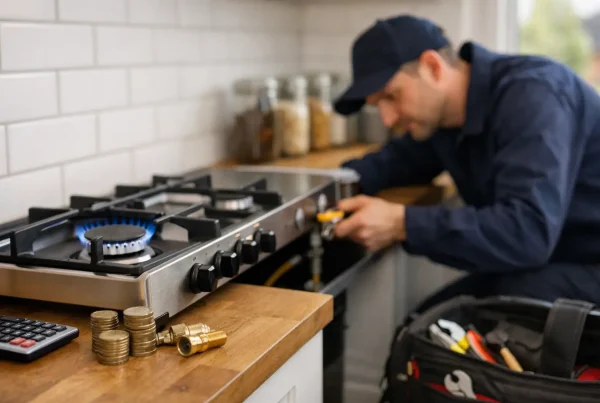
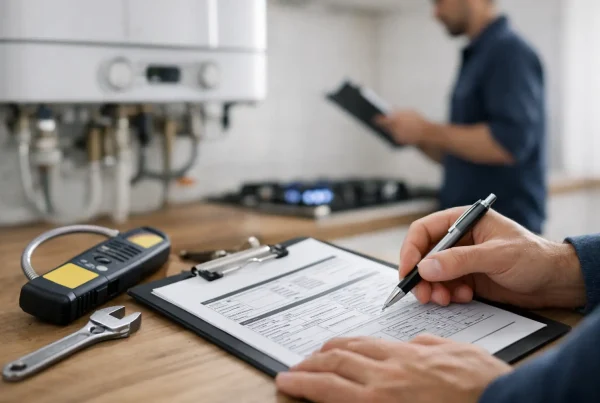
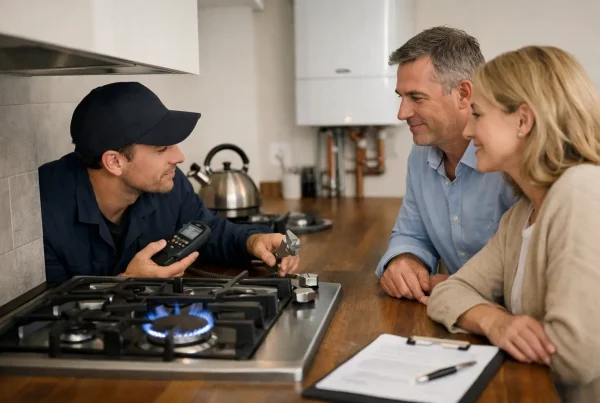
A tenant is due to collect the keys, the letting agent asks for the paperwork, and you are left searching for a landlord gas certificate example. The document you need is normally called a Gas Safety Record, although many landlords, agents and tenants still call it a CP12 or landlord gas certificate. Whatever name is used, it is a legal safety record that needs to be correct, current and issued by a Gas Safe registered engineer.
For landlords, this is not paperwork to sort out at the last minute. A missed check can delay a tenancy, create problems with your insurer or managing agent, and leave you exposed if a gas appliance is unsafe. Here is what a proper record looks like, what the details mean and what to check before you hand it over.
Why the certificate matters
A Gas Safety Record confirms that a qualified Gas Safe engineer has inspected the relevant gas appliances, flues and installation pipework at a rented property. The inspection is intended to identify unsafe appliances, poor combustion, gas leaks, blocked flues and other faults that could put occupants at risk.
Landlords must arrange a gas safety check at least every 12 months for gas appliances and flues they provide. The record is evidence that the check has been completed. It is not the same as a boiler service, although both can often be carried out during the same visit if appropriate.
A service looks more closely at the condition and performance of an appliance. A gas safety inspection confirms it is safe to use at the time of the check. A boiler may pass a safety check but still benefit from a full annual service, particularly where it is older, heavily used or covered by a manufacturer warranty that requires servicing.
Landlord gas certificate example: the main sections
There is no useful blank template that can replace an engineer’s inspection. A valid record must be created following the work at the property by an engineer registered for the type of gas work involved. Still, this simplified landlord gas certificate example shows the information you should expect to see.
> Property address: 24 Example Street, Leeds, LS0 0AA > Landlord or agent: J Smith Property Services > Date of check: 14 August 2026 > Engineer: A Brown, Gas Safe registered engineer > Gas Safe registration number: [engineer’s registration number] > Appliance checked: Wall-hung gas combination boiler > Location: Kitchen cupboard > Appliance type: Boiler > Safety checks completed: Operating pressure, burner pressure, gas rate where applicable, flue performance, ventilation, safety devices and signs of unsafe operation > Result: Safe to use > Next check due: By 13 August 2027 > Defects found: None recorded > Engineer signature and landlord or agent acknowledgement: Recorded
The exact layout will vary between engineers and software systems. What matters is that the record clearly identifies the property, engineer, appliances checked, tests carried out, results and any action required. It should not look like a generic invoice with the words “gas check” added at the bottom.
What to check on the Gas Safety Record
The property and responsible person
Start with the address. It sounds obvious, but a record for the wrong flat, house number or building can cause trouble when an agent audits the file or a tenant asks for a copy. The landlord’s name, or the appointed managing agent’s details, should also be present.
If you own several properties, check that appliance locations are clear. “Boiler” alone is not always enough in a large house or shared property. “Boiler in first-floor airing cupboard” and “gas hob in ground-floor kitchen” leave far less room for confusion.
Engineer details and Gas Safe registration
The engineer’s name and Gas Safe registration number should be recorded. You should also make sure the engineer is qualified for the appliances being inspected. Gas Safe registration is not a one-size-fits-all approval. Engineers hold different categories for work such as boilers, cookers, fires and commercial equipment.
If anything does not look right, ask the engineer for their Gas Safe ID card and check the relevant work categories. A genuine engineer will not object to being asked. It is your property and your legal duty.
Every landlord-supplied gas appliance
The record should identify each gas appliance provided as part of the tenancy. This commonly includes a boiler, gas fire, cooker or hob. It should also cover relevant flues and installation pipework.
A tenant’s own gas appliance can be a grey area. You are generally not responsible for servicing or checking an appliance the tenant owns, but you remain responsible for the gas pipework and flues you supply. If a tenant has fitted an appliance or brought one into the property, get clear advice rather than assuming it is outside your responsibilities.
Test results, defects and safety classification
A good record says what was checked and records the outcome. If an appliance has a defect, the engineer should explain it in plain terms and state what has been done. Depending on the problem, an appliance may be classed as at risk or immediately dangerous and should not remain in use.
Do not treat a warning as a minor admin point. A disconnected boiler, a capped gas fire or a note that repairs are needed means action is required before the appliance can safely serve the tenancy. Keep the engineer’s report, repair invoice and any replacement paperwork with the safety record.
When to give the certificate to tenants
New tenants must receive a copy of the current Gas Safety Record before they move in. Existing tenants must be given a copy within 28 days of the annual check. Keep your own copy for at least two years.
Email is usually practical, provided you can show it was sent and the tenant agrees to receive documents electronically. Many landlords also leave a printed copy in the tenancy file or provide one at check-in. The key point is being able to demonstrate that the tenant received it.
Avoid leaving this until the certificate is about to expire. Book the visit early enough to deal with access issues or repairs. In most cases, arranging the annual check between 10 and 12 months after the previous check lets you keep the existing renewal date, rather than bringing it forward each year.
Common mistakes that make compliance harder
The most common problem is confusing a boiler service invoice with a Gas Safety Record. An invoice may show that work was done, but it may not contain the legal details required for a landlord gas safety check. Ask for the record specifically.
Another mistake is assuming a recent tenant change resets the annual deadline. It does not. The gas check follows the date of the previous valid record, not the start date of a new tenancy. A change of agent also does not remove the landlord’s responsibility, so make sure certificates are transferred when management arrangements change.
Access can be difficult too. Tenants must allow reasonable access for essential safety work, but landlords should not simply turn up and let themselves in. Give proper notice, keep a record of contact attempts and work with the tenant to arrange a suitable appointment. If access is repeatedly refused, take advice promptly and keep evidence that you have made reasonable efforts.
Make the annual check easier to manage
Set a reminder well before the due date and keep one property file containing the previous Gas Safety Record, boiler service record, repair history and appliance details. This saves time when a fault develops or an agent asks for documents.
For landlords in Leeds, GasPlumb can carry out landlord gas safety checks with a Gas Safe engineer and flag issues clearly before they become a bigger problem. If the boiler needs servicing, repair or replacement, dealing with it through one local team also reduces the back-and-forth between trades.
A clear, current Gas Safety Record gives tenants confidence that the home is being looked after properly. More importantly, it gives you time to fix problems safely, rather than discovering them on move-in day or during a breakdown.