
No one wants to make a boiler decision at 7am with no heating, no hot water and the house turning cold fast. When you are stuck weighing up boiler repair or replace, the right answer usually comes down to one thing – whether you are paying for a proper fix or just buying a bit more time.
That sounds simple, but the detail matters. Some boilers are well worth repairing. Others have reached the point where another callout, another part and another week of uncertainty just do not make sense. If you are a homeowner or landlord, the goal is not to squeeze every last day out of an ageing boiler at any cost. The goal is reliable heating, safe operation and sensible spending.
Boiler repair or replace – start with the fault, not the panic
A lot of people assume a broken boiler means a full replacement. That is not always true. Boilers stop working for all sorts of reasons, and many faults are fixable without major work. A failed pump, faulty fan, pressure issue, broken thermostat or worn valve can often be repaired quickly if the rest of the appliance is in decent condition.
On the other hand, some faults point to a bigger problem. If the heat exchanger is failing, parts are obsolete, or the boiler has had repeated breakdowns over the last year or two, it is worth stepping back before approving another repair. The issue is not just the cost of today’s job. It is the pattern.
A proper diagnosis matters here. You need to know what has failed, why it failed and whether that repair gives you a realistic period of reliable service afterwards. A quick fix on a tired boiler can look cheaper on paper and cost more over the next winter.
When repair is usually the sensible option
If your boiler is fairly modern, has been serviced regularly and this is its first meaningful breakdown, repair is often the obvious choice. A single failed component does not mean the whole appliance is finished.
Repair also tends to make sense when the cost is proportionate. There is no perfect rule, but if the boiler is in good overall condition and the repair is relatively modest, keeping it going is often the better value option. That is especially true if parts are readily available and the engineer is confident the fault is isolated rather than part of a wider decline.
It is also worth repairing when the boiler has been dependable and efficient up to now. A boiler that has given years of solid service and suddenly develops one clear fault is very different from a boiler that keeps letting you down. Reliability history counts for a lot.
For landlords, there is another factor. If a repair can restore safe, dependable heating quickly and avoid major disruption to tenants, it may be the practical route. That said, patching up an unreliable boiler again and again can create more complaints, more emergency calls and more cost over time.
When replacing the boiler makes more sense
There comes a point where repair stops being sensible and starts becoming expensive delay. Older boilers are the most obvious example. Once a boiler gets into double figures and especially beyond 12 to 15 years, you have to be realistic. Even if one repair is possible, other parts may not be far behind.
Replacement is often the better option if the boiler breaks down repeatedly, struggles to heat the property properly or has become inefficient. Higher running costs, noisy operation, uneven heating and regular loss of pressure can all point to a system that is wearing out rather than suffering one isolated issue.
Parts availability is another big one. Some older models are difficult to source parts for, and that changes the repair decision quickly. If parts are discontinued or costly because they are hard to find, you can end up spending a lot on a boiler that still has no guarantee of long-term reliability.
Then there is the bigger household picture. If your boiler is undersized, your hot water is poor, or the system no longer suits the property, replacing it can solve more than one problem at once. In that case, you are not just replacing a faulty boiler. You are improving comfort, efficiency and day-to-day use.
The cost question – cheap now or better value overall?
Most people start with price, and that is understandable. A repair nearly always costs less upfront than a new boiler installation. But upfront cost is only half the story.
If the repair gets you several more reliable years, that is money well spent. If it buys you two months before the next breakdown, it is not. This is where homeowners often get caught out. They approve a repair because it is the cheapest option today, then face another fault, another bill and eventually a rushed replacement in the middle of winter.
A replacement costs more at the start, but it can lower fuel bills, reduce the chance of emergency callouts and give you more confidence that the heating will work when you need it. For some households, that peace of mind matters as much as the numbers.
There is no universal cut-off point where repair becomes wrong. But if the quote is substantial and the boiler is old, unreliable or inefficient, it is worth asking whether that money is better put towards a new appliance instead.
Age, efficiency and reliability all matter together
People often focus on boiler age alone, but age is only part of the decision. An older boiler that has been maintained properly and has had very few issues may still justify repair. A newer boiler that has had repeated faults, poor installation or ongoing system problems can be far more trouble than its age suggests.
Efficiency matters too. Older boilers can cost more to run, especially if they are no longer performing as they should. If your heating bills have crept up and the boiler seems to be working harder for worse results, replacing it may save money in the longer term.
Reliability is what usually tips the balance. If you do not trust the boiler, that tells you something. When people start keeping emergency heaters in the cupboard because they expect the boiler to fail again, they are usually past the point where another repair feels sensible.
Signs you should not ignore
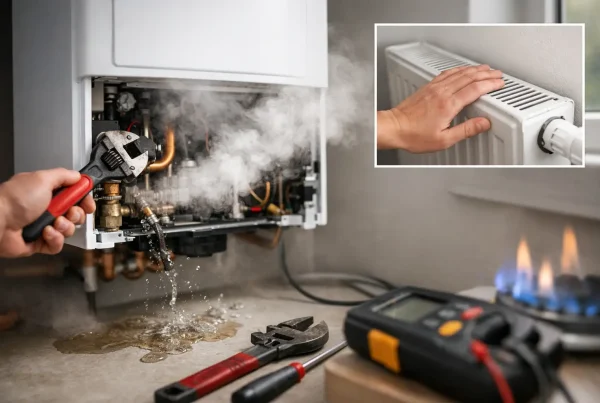
Some warning signs deserve quicker action. If the boiler keeps locking out, makes unusual banging or whistling noises, leaks water, struggles to maintain pressure or leaves radiators patchy and cold, it needs checking properly.
If you notice unusual smells, signs of soot, or you have any concern at all about petrol safety, stop using the appliance and get it looked at straight away. Safety comes before cost every time.
A yellow flame rather than a clear blue one can also indicate a problem, although modern boilers are often enclosed so you may not be able to inspect the flame directly. Either way, any suspicion of unsafe operation should be treated as urgent.
Why a proper inspection saves money
Guesswork is expensive. The best way to answer boiler repair or replace is with an honest inspection from a qualified engineer who deals with these faults every day. You want a clear view of the immediate repair, the general condition of the boiler and what is likely to happen next.
That does not mean every older boiler gets condemned. It means the decision should be based on evidence, not panic and not false economy. A good engineer will explain whether the fault is straightforward, whether other components are showing wear, and whether the repair is likely to give you dependable service.
That sort of advice is especially useful if you have had more than one breakdown recently. Repeated callouts usually mean the boiler is telling you something.
For homeowners and landlords, the real question is reliability
If you own the property you live in, you are weighing cost against comfort, disruption and future hassle. If you are a landlord, you are also thinking about tenant satisfaction, legal responsibilities and avoiding emergency failures at the worst possible time.
Either way, the answer is rarely about getting the cheapest job done. It is about choosing the option that gives you safe, reliable heating without wasting money on short-term fixes that do not last.
In Leeds, where winter breakdowns can quickly become urgent, speed matters as much as the decision itself. That is why many customers ask not just what can be done, but what makes practical sense.
If your boiler has one clear fault and the rest of the system is sound, repair may be the right call. If it is old, unreliable and draining money every few months, replacement is usually the better investment. The key is not to wait until a small decision turns into a bigger problem than it needed to be.
A boiler does not have to be brand new to be worth keeping, but it does need to earn its place by working properly when you need it most.