
You notice the radiators are cold, the hot water is gone, and the boiler is just sitting there doing nothing. If your boiler not firing up has turned into the main problem in the house, you usually need answers quickly, not a long technical lecture. Some faults are simple enough to spot yourself. Others need a Gas Safe engineer straight away.
The main thing is not to guess. A boiler can stop firing for several different reasons, and the right next step depends on what the fault is doing. If you can narrow it down safely, you save time. If not, you avoid making a bad situation worse.
Why a boiler not firing up happens
When a boiler fails to fire up, it usually comes down to one of a few common issues. The boiler may have no power, no gas supply, low pressure, a thermostat problem, a frozen condensate pipe, or an internal fault such as a failed ignition component, fan, pump or printed circuit board.
Some boilers show an error code, which can point you in the right direction. Others are less helpful and just lock out. Either way, no ignition means the boiler is not able to start the heating cycle properly, and that can be caused by something minor or something that needs a proper repair.
The difficulty is that the same symptom can have different causes. A dead display might be a tripped fuse spur, but a lit display with no flame could point to ignition or gas supply issues. That is why it helps to check the basics first.
What to check first if the boiler is not firing up
Start with the obvious. Is the boiler switched on at the wall? It sounds simple, but switched spurs do get knocked off, especially in kitchens, cupboards and utility spaces. If the display is blank, check whether the power supply has been interrupted and whether a fuse or breaker has tripped.
Next, look at the thermostat and timer. If the room thermostat is set too low, the boiler may not be getting a demand for heat. If the programmer has been changed accidentally, the boiler might be set to off or to a schedule that is not currently calling for heating. Smart controls can also lose connection or need resetting.
Then check the boiler pressure gauge. On many sealed systems, pressure should usually sit around 1 to 1.5 bar when the system is cold, though the exact range can vary by model. If pressure has dropped too low, the boiler may lock out and refuse to fire.
If you have hot water but no heating, the issue may be with the controls, motorised valve, pump or thermostat rather than the boiler itself. If you have neither heating nor hot water, the fault is more likely to be with the boiler, power supply or gas supply.
Check the pressure carefully
Low pressure is one of the more common reasons for a boiler not firing up. If the gauge is sitting too low, the boiler may not allow itself to run. Some homeowners top up the pressure using the filling loop, but only do this if you know your system and your manufacturer instructions.
Too much pressure is not good either. Overfilling the system can create another fault and may cause the pressure relief valve to discharge. If the pressure keeps dropping after you top it up, that points to a leak, a faulty expansion vessel, or another issue that needs attention.
A one-off pressure drop can happen. Repeated pressure loss is different. That is repair territory, not a reset-and-hope job.
Resetting the boiler – when it helps and when it does not
Many modern boilers have a reset button. If the boiler has locked out after a temporary fault, resetting it may get it going again. This can help after a low-pressure issue has been corrected or after a minor interruption.
Use the reset function once, following the boiler instructions. If it fires and runs normally, keep an eye on it. If it locks out again, there is an underlying fault. Repeatedly pressing reset will not fix a failed component, and it can delay proper diagnosis.
If you smell gas, do not reset anything. Turn off the supply if safe to do so, open windows, avoid switches and call the gas emergency line immediately.
Frozen condensate pipe in cold weather
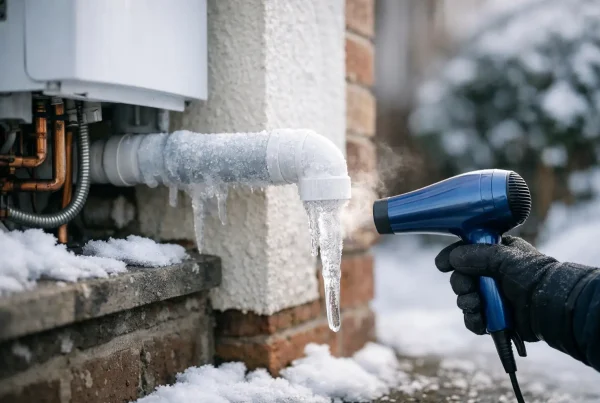
In winter, a frozen condensate pipe is a regular cause of boilers failing to fire. Condensing boilers produce acidic waste water that drains through a condensate pipe, often to an outside drain. If that pipe freezes, the boiler can lock out.
A frozen condensate pipe is more likely during very cold weather, especially if the external pipe run is long or poorly insulated. Some boilers will display a fault code linked to ignition or condensate blockage.
You may be able to thaw the pipe carefully using warm, not boiling, water. The key word is carefully. If access is awkward or you are not sure which pipe it is, leave it alone and get it checked. The fix may be simple, but only if it is done safely.
Could it be the gas supply?
If the boiler has power but still will not ignite, the gas supply is another possibility. Check whether other gas appliances in the property are working, if you have them. If the gas hob also fails to light, that suggests a wider supply issue rather than a boiler-only fault.
If you have a prepayment meter, make sure there is credit on it. It catches people out more often than you would think. If there is a supply interruption, you may need to wait until the supply is restored.
Do not remove the boiler casing or try to investigate gas components yourself. Anything involving the gas valve, burner, ignition or combustion side of the appliance must be handled by a Gas Safe engineer.
Faulty parts that stop a boiler firing
If the simple checks do not solve it, the problem may be internal. A boiler can fail to fire because of a faulty ignition lead, electrode, fan, pump, flame sensor, air pressure switch, gas valve or PCB. On older boilers, wear and tear becomes a bigger factor. On newer boilers, sensors and electronics can still fail without much warning.
This is where diagnosis matters. Replacing parts based on guesswork wastes money. A proper engineer will test the appliance, identify the actual fault, and tell you whether the repair is sensible or whether the boiler is becoming uneconomical to keep patching up.
There is also the servicing angle. Boilers that are not serviced regularly are more likely to develop preventable faults. Dirt, poor combustion, blocked condensate traps and worn ignition components do not always show themselves until the boiler suddenly refuses to start.
When to call an engineer straight away
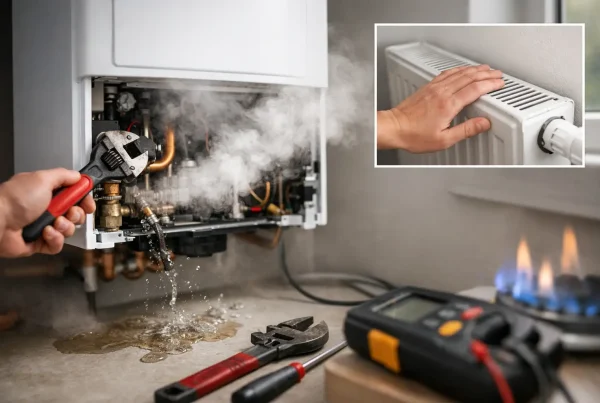
Some situations are not for home troubleshooting. If the boiler not firing up is paired with a gas smell, unusual banging noises, scorch marks, water leaking from the appliance, repeated lockouts or complete loss of heating and hot water in cold weather, get professional help quickly.
The same applies if you are a landlord. If heating or hot water has failed in a tenanted property, speed matters, and so does using the right qualified engineer. Delays can turn a straightforward repair into a bigger complaint.
For homeowners, the practical question is usually this: is it worth one last reset, or is it time to book a repair? If you have checked power, thermostat, timer and pressure, and the boiler still will not fire, there is little value in pushing on beyond that.
Repair or replace?
Not every non-firing boiler needs replacing. If the fault is a sensor, ignition part, frozen condensate issue or pressure problem, a repair may be the sensible option. If the boiler is older, breaking down often, or has expensive component failures stacking up, replacement can make more financial sense.
It depends on age, condition, parts availability and repair cost. A newer boiler with one clear fault is a different case from an ageing unit that has already had several callouts. A good engineer should be honest about that rather than steering you one way every time.
For households in Leeds dealing with a boiler breakdown, speed and a clear answer matter most. That is where an experienced local firm such as GasPlumb can make the process easier – find the fault, explain it plainly, and get the heating back on without fuss.
Avoiding the same problem again
The best protection against a boiler that refuses to fire is regular servicing, keeping an eye on pressure, and dealing with small warning signs early. If the boiler has been noisy, losing pressure, locking out now and then, or struggling in cold weather, those are signs worth acting on before it stops altogether.
It also helps to know your controls. Plenty of callouts start with a timer issue, a thermostat setting, or pressure that dropped quietly over time. You do not need to become an engineer, but knowing the basic checks can save stress.
When the boiler stops, most people just want heat and hot water back with minimum disruption. That is fair enough. Start with the safe basics, do not take risks with gas appliances, and if the fault is not obvious, get it sorted properly before a small problem turns into a cold house and a bigger bill.