
That sudden clunk or bang from the boiler cupboard usually happens at the worst time – early morning, late at night, or right when you need the heating most. If your boiler is making a banging noise, it is not something to ignore. Some causes are minor, but others point to pressure problems, trapped air, limescale build-up or parts starting to fail.
A noisy boiler does not always mean a full replacement is needed. Just as often, it means the system needs the right diagnosis before a small fault turns into a breakdown. The key is knowing what the sound is telling you, what you can check safely, and when to get a Gas Safe engineer involved.
Why a boiler making banging noise should not be ignored
Boilers and central heating systems make some normal operating sounds. You might hear a low hum, a click when the boiler fires up, or the quiet movement of water through pipes and radiators. A bang, knock or loud thud is different.
That kind of noise often means water is not moving through the system properly, heat is building up where it should not, or a component is under strain. Leave it long enough and you can end up with no heating, no hot water, higher running costs, or damage to parts that would have been cheaper to repair early.
If the sound is new, louder than usual, or happens alongside faults like pressure loss, kettling, cold radiators or boiler lockout, it needs checking properly.
Common reasons your boiler is making a banging noise
The most common cause is kettling. This happens when limescale, sludge or debris builds up inside the heat exchanger. Water gets trapped or overheated in places it should still be flowing through, which creates steam bubbles. When those bubbles collapse, the result can sound like banging, knocking or rumbling.
Kettling is more common in areas with harder water, but system sludge can cause similar trouble anywhere. It tends to develop over time rather than all at once, so many homeowners notice the boiler getting gradually noisier.
Air trapped in the system is another regular cause. Airlocks can affect circulation and create knocking sounds in the boiler, pipes or radiators. Sometimes the noise travels, so what sounds like the boiler may actually be linked to the wider heating system.
Low water circulation is also high on the list. A pump that is struggling, partially seized or wearing out can stop heated water moving as it should. When heat builds up too fast, noises follow. A blocked filter, closed valve or restriction in the pipework can lead to the same sort of problem.
Boiler pressure can play a part too. Pressure that is too low or too high can affect how the system runs, especially if there is also air in the system or an issue with the expansion vessel. In some cases, pipes expanding and contracting as they heat up can create sharp knocking sounds, particularly where pipework is tight under floors or through joists.
Then there are the mechanical faults. Diverter valves, fans, burners and other internal parts can create unusual noises when worn or faulty. Not every bang is caused by scale or sludge. That is why guessing rarely saves time or money.
What the sound can tell you
A boiler making banging noise during start-up may point to ignition issues, delayed ignition or pressure-related faults. That needs care because anything involving combustion should be checked by a qualified engineer.
If the banging happens after the heating has been running for a while, kettling or circulation problems are more likely. The system heats up, water movement becomes restricted, and the noise appears once temperatures rise.
If you hear knocking in the pipes or near radiators rather than the boiler itself, pipe expansion, air in the system or poor balancing may be contributing. If the sound is more of a rumble, scale build-up inside the heat exchanger is often the first thing engineers look at.
There is always some overlap. The exact sound matters, but so does when it happens, how often it happens, and whether you have other symptoms at the same time.
Safe checks you can do before calling someone out
You should never open the boiler casing or try to repair gas appliances yourself. But there are a few sensible checks you can make.
Start with the boiler pressure gauge. Most domestic systems run best around 1 to 1.5 bar when cold, though the correct range depends on the appliance. If it is very low or unusually high, that is worth noting when you call. Some boilers need topping up occasionally, but if pressure keeps dropping, there is usually an underlying issue.
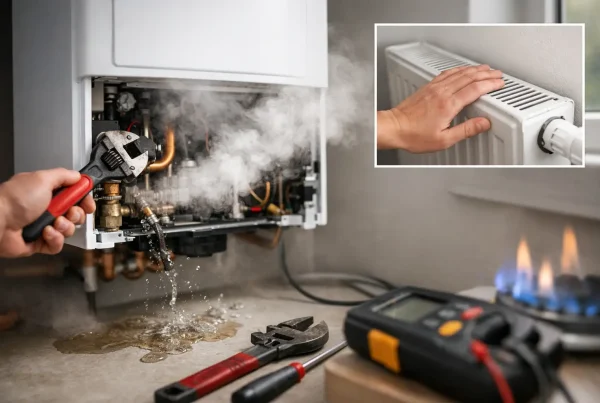
Have a look at your radiators. If some are cold at the top and warm at the bottom, trapped air may be part of the problem. If they are warm at the top and cold lower down, sludge build-up is more likely. Bleeding a radiator is a basic job many homeowners can do, but only if you are confident. If you are unsure, leave it alone and get it checked.
Check whether the noise happens on hot water, heating, or both. That small detail can help narrow things down quickly. Also look for any obvious leaks around radiators, valves or pipework, as water loss can affect pressure and circulation.
If your system has recently become noisy after other work was done, mention that too. Air can be introduced during repairs, and valves may not always be left in the ideal position.
When to call a Gas Safe engineer
If the boiler is locking out, losing pressure, failing to heat properly, or making loud repeated banging noises, do not wait. The same goes for any burning smell, signs of leaking, or error codes on the display.
Any suspicion of an ignition fault, gas issue or fault inside the boiler itself should be left to a Gas Safe engineer. The boiler may still run for now, but that does not mean it is safe to keep using it.
For landlords, a noisy boiler should be dealt with quickly even if tenants still have heating and hot water. Small faults can turn into avoidable emergency callouts, and tenants will often notice unusual boiler noises long before a full breakdown happens.
A proper visit is about more than stopping the noise. The engineer should identify the real cause, test the system properly and advise whether the issue is repairable, linked to poor system water quality, or part of a wider problem with the heating circuit.
How the problem is usually fixed
The right repair depends on the cause. If sludge or debris is affecting circulation, the system may need cleaning and the filter checked. If limescale has built up in the heat exchanger, that component may need flushing, descaling or replacing depending on age and condition.
If trapped air is involved, the system may simply need venting and rebalancing. Pump problems can require adjustment or replacement. Pressure faults might point to the filling loop, pressure relief valve or expansion vessel.
Sometimes the cheapest fix is not the best long-term one. For example, replacing a worn part without dealing with dirty system water can mean the same fault returns. On older boilers, there is also a point where repeated repairs stop making financial sense. A good engineer will be straight with you about that.
Can you prevent banging noises in future?
In many cases, yes. Regular boiler servicing helps catch early signs of scale, poor combustion, worn parts and circulation issues before they turn into noise and breakdowns. Keeping the heating system clean matters just as much as checking the boiler itself.
If your system does not already have a magnetic filter, it may be worth fitting one. It helps collect debris before it causes trouble in the boiler and pipework. Using inhibitor in the system water also helps reduce internal corrosion and sludge build-up.
If your radiators take ages to warm up, have cold spots, or the boiler has been getting noisier over time, do not wait for a total failure. Getting it looked at early is usually the more economical option.
For homeowners and landlords in Leeds, speed matters when the heating starts acting up. GasPlumb handles boiler faults, servicing and heating repairs with the kind of practical local support people need when a system starts making noises it should not be making.
A boiler does not usually start banging for no reason. Sometimes it is trapped air. Sometimes it is scale, sludge or a pump on its way out. Either way, the sensible move is the same – get the fault diagnosed before the noise turns into a cold house and a bigger repair bill.