
A radiator that is hot at the bottom but cold across the top is usually holding trapped air. Bleeding radiators step by step is a straightforward job for many homeowners, but doing it in the right order protects your flooring, avoids hot water spills and helps you spot faults that need an engineer rather than a quick DIY fix.
Air in a central heating system stops hot water circulating properly through the radiator. The boiler may work harder, rooms can stay chilly and you may hear gurgling or knocking from pipes. Bleeding releases that air, allowing the radiator to fill with water again.
When does a radiator need bleeding?
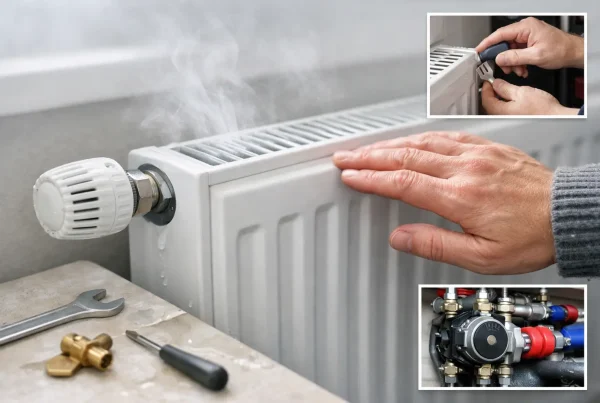
Run your heating for long enough for the radiators to warm up, then carefully check each one. A radiator that feels noticeably cooler at the top than the bottom is the usual sign of trapped air. You may also notice uneven warmth between rooms, bubbling noises or radiators taking much longer than normal to heat.
Do not confuse this with a radiator that is cold at the bottom. Cold lower sections are more often caused by sludge or debris inside the radiator. Bleeding will not remove sludge, and repeatedly opening the bleed valve will not solve it.
If every radiator is cold, the issue could be the boiler, programmer, thermostat, circulating pump or system pressure. Start by checking that the heating is switched on and the boiler has no fault code. If it does, leave the boiler alone and arrange a professional diagnosis.
What you need before bleeding radiators
You only need a radiator key for most older-style valves, plus a dry cloth or small towel and a container to catch a small amount of water. Some newer radiators have a flat-headed bleed screw which can be turned with a suitable screwdriver. Use the correct tool and avoid forcing the valve.
It is worth having gloves to hand, especially if the radiator is in a tight space. Keep a second cloth nearby for drips. Water from the system can be dark or dirty, so do not use a towel you want to keep looking new.
Before you begin, identify whether you have a sealed heating system. Most modern combi boiler systems are sealed and have a pressure gauge or digital pressure reading. Bleeding radiators can reduce that pressure slightly, so you may need to top it up afterwards. If you are unsure how to repressurise your boiler, check its instructions or call a heating engineer rather than guessing.
Bleeding radiators step by step
1. Switch the heating off and let the system cool
Turn off the central heating at the controls and wait until the radiators are cool enough to touch comfortably. This matters. Bleeding a hot radiator can release very hot water under pressure, creating a risk of scalding and making a mess harder to control.
Letting the system cool also gives the trapped air time to rise to the top of each radiator, where the bleed valve is located.
2. Check the boiler pressure first
On a sealed system, take a note of the pressure before starting. When cold, many boilers operate around 1 to 1.5 bar, but follow the marking on your boiler or its manufacturer guidance. The correct range can vary by system.
If the pressure is already very low, do not bleed every radiator and hope for the best. You could leave the system unable to run. Low pressure may simply mean the system needs topping up, but frequent pressure loss can point to a leak, a faulty expansion vessel or another fault that needs attention.
3. Start downstairs and work upwards
Begin with the radiator on the lowest floor, then move around the property and work your way upstairs. This is a sensible order because air rises through the system. In a typical house, bleed the ground-floor radiators first and leave the highest radiator until last.
Place your cloth and container directly underneath the bleed valve. The valve is normally at the top corner of the radiator, opposite the thermostatic control or manual valve.
4. Open the bleed valve slowly
Fit the radiator key securely and turn it anti-clockwise by a small amount, usually no more than a quarter turn. You should hear a faint hiss as air escapes. Keep your hand and face clear of the valve.
Do not remove the bleed screw fully. It is only meant to be opened enough to let air out. Turning it too far can cause water to flow quickly and may damage the valve or make it difficult to close.
5. Wait for a steady trickle of water
When the hissing stops, water will begin to appear. Let a small, steady amount run into the cloth or container, then turn the key clockwise to close the valve. Close it firmly but do not overtighten it. Overtightening can damage the screw or seal.
Wipe the valve and radiator dry. Check that there is no continuing drip before moving to the next radiator. If a valve will not close properly or starts leaking, do not keep adjusting it aggressively. Put a towel beneath it and arrange a repair.
6. Repeat around the house
Work through each radiator that has a cool top. You can bleed all radiators while you are doing the job, but there is no need to open valves on radiators that are heating evenly unless you are dealing with a known system issue.
Take your time, particularly with radiators upstairs. A small amount of water is normal. A large flow, black water or a valve that refuses to stop are signs to pause and get advice.
7. Check and restore boiler pressure
Once every valve is closed, check the boiler pressure again. On a sealed system, it may have dropped. If it is below the recommended cold range, use the filling loop or built-in filling arrangement exactly as instructed for your boiler to bring it back to the correct level.
Add water slowly and stop at the advised pressure. Overfilling can cause the pressure relief valve to discharge outside, and it may lead to more problems than it solves. If you cannot find the filling loop, are not certain which valves to use or pressure rises and falls repeatedly, call an engineer.
8. Turn the heating back on and test it
Switch the heating back on and allow the system to warm fully. Check each radiator for an even temperature from top to bottom, allowing for the fact that the bottom may be slightly cooler on some systems. Look closely around every bleed valve for drips.
If you release a lot of air, it can be worth checking the radiators again the following day. Air can move through the system after the heating has run, particularly after a recent repair, boiler installation or system refill.
When bleeding is not the answer
A radiator that stays cold after bleeding may have a stuck thermostatic radiator valve, a closed lockshield valve, sludge inside it or a balancing problem. If only one room is cold, the radiator valves are often the first place to check. Do not force a stiff valve, as it can snap or begin to leak.
Repeated air in the same radiator is also not normal. A small amount of air can build up over time, but having to bleed radiators every few weeks may indicate a leak, corrosion, a faulty automatic air vent or an issue with the system pressure. Constantly topping up a sealed system introduces fresh water, which can increase internal corrosion.
Brown or black water coming from a radiator suggests dirty system water. This can reduce heating performance and put extra strain on boiler components. The right solution may be cleaning, flushing, inhibitor treatment or a filter check, depending on the age and condition of the system. It needs proper assessment rather than a one-size-fits-all fix.
When to call a heating engineer
Call for help if you have a boiler fault code, pressure that keeps dropping, a leaking bleed valve, water around the boiler or pipework, or radiators that remain cold despite correct bleeding. Landlords should also act promptly where heating problems affect a tenant, particularly during colder weather.
For homes in Leeds, GasPlumb can investigate uneven heating, radiator faults, boiler pressure problems and leaks, then carry out the repair needed. A quick diagnosis can prevent a minor heating issue becoming a breakdown when you need the system most.
A properly bled radiator should heat evenly and quietly. If yours does not, treat that as useful information: the system is telling you it needs more than a radiator key.