
A thermostat can look fine on the wall while quietly causing cold rooms, higher bills and a boiler that seems to have a mind of its own. Recognising faulty room thermostat symptoms early can save you from assuming the boiler has failed when the problem is actually a much smaller heating control issue.
Your room thermostat tells the heating system when to switch on and off based on the temperature in your home. When it gives the wrong instruction, your boiler and radiators cannot heat the house properly, no matter how well the rest of the system is working.
Common faulty room thermostat symptoms
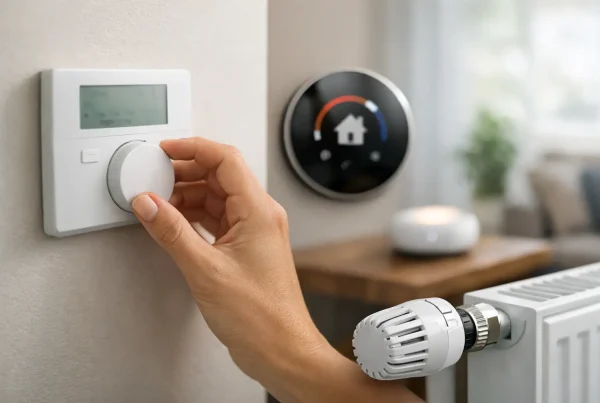
The most obvious sign is that the heating does not respond when you change the temperature. You may turn the thermostat up well above room temperature but the boiler does not fire up. Equally, the heating may keep running after the room feels warm and the thermostat has been turned down.
Neither result automatically means the thermostat is at fault. A boiler, programmer, motorised valve or wiring problem can produce similar behaviour. However, if the issue follows the thermostat setting rather than happening at random, the control is a sensible place to start.
Your home feels colder or warmer than the setting
Set the thermostat to 20°C and the house should settle somewhere close to that temperature. It will not be exact in every corner of the property, but a large difference is worth investigating.
If a room feels chilly at a setting of 23°C, or uncomfortably warm at 17°C, the thermostat may be reading the temperature incorrectly. Older mechanical thermostats can become less accurate over time. Digital models can also give misleading readings if their sensor has failed or if they are fitted in a poor location.
Keep in mind that a thermostat mounted near a radiator, cooker, sunny window, draughty door or fireplace will react to that local heat or cold. In that case, the unit may be working properly but is measuring the wrong part of the room.
The boiler switches on and off too often
Short cycling is when the heating starts, stops and starts again in quick succession. You may hear the boiler fire up several times within a short period without the house properly warming up.
A faulty thermostat can cause this by wrongly detecting changes in room temperature or briefly losing its connection to the receiver. It is not the only possible cause. Boiler pressure, circulation and internal boiler faults also need checking, particularly if there are warning lights or fault codes.
Do not keep resetting the boiler repeatedly to force it to run. If the boiler is cutting out, an engineer should identify why rather than masking the fault.
The heating only works in one position
Some thermostats seem to work only when turned right up, while others do nothing until they are turned down to a certain point. With an older dial thermostat, you may find that moving it slightly causes a click, but the heating response is inconsistent.
This can indicate worn internal contacts. On a digital thermostat, buttons that do not respond, a faded display or settings that change on their own point to a failing unit. A replacement is often more practical than trying to repair an ageing thermostat.
A wireless thermostat loses connection
Wireless room thermostats are convenient, but flat batteries, poor signal and pairing faults can stop them communicating with the boiler receiver. Common clues include a blank screen, a low-battery symbol, a flashing connection icon or heating that does not react to changes on the thermostat.
Changing the batteries is a sensible first check. Use fresh batteries of the correct type and make sure the battery contacts are clean. If the display works but the receiver is not responding, do not start removing covers or altering electrical wiring. The thermostat may need pairing again, or there may be a fault in the receiver or controls.
Your heating schedule no longer makes sense
Programmable thermostats and smart controls should follow the times and temperatures you set. If the heating comes on at odd times, ignores the programmed schedule or regularly loses the correct time, the settings may be wrong or the unit may be failing.
Check whether a holiday mode, manual override or frost setting has been selected by mistake. Power cuts can also affect some older controllers. If the schedule continues to reset after you have checked these basics, it is time to have the controls assessed.
Safe checks before calling a heating engineer
There are a few straightforward checks that can rule out simple problems. They are safe for most homeowners and can help an engineer diagnose the fault faster.
First, make sure the thermostat is set above the current room temperature. If it is a programmable model, check that the correct day, time and heating period are selected. Then look at the boiler display for an error code, warning light or a low-pressure reading. These details matter because a thermostat cannot make a boiler run if the boiler itself has locked out.
For wireless controls, replace batteries if they are low or have been in place for a long time. Check that the thermostat has not been moved behind furniture, placed beside another electronic device or taken too far from the receiver.
You can also compare the thermostat reading with a separate room thermometer placed nearby for 15 to 20 minutes. A difference of a degree or so is not usually a concern. A repeated, significant difference suggests the thermostat sensor or its location needs attention.
Avoid removing the thermostat from the wall, touching terminals or attempting to bridge wiring connections. Heating controls are connected to the electrical system and incorrect work can damage the boiler, create an electrical risk or leave the heating permanently on.
Is it the thermostat or the boiler?
The key question is whether the boiler reacts correctly to a genuine call for heat. If you raise the thermostat and the boiler does nothing, the thermostat, receiver, programmer or boiler could be responsible. If the boiler fires but radiators remain cold, the problem is more likely to involve circulation, radiator valves, system pressure or sludge in the heating system.
No hot water as well as no heating is another useful clue. In many homes, the room thermostat controls central heating only. If both services have stopped, the cause may be within the boiler or its wider controls rather than the thermostat alone.
A boiler that works when operated manually but ignores the thermostat often points towards a control fault. An engineer can test the thermostat signal, receiver, wiring and boiler response properly, rather than replacing parts on guesswork.
When a replacement makes more sense
A basic wired thermostat can last for years, but replacement is worth considering when it is inaccurate, unreliable or difficult to use. If you have an old dial control with no timer, upgrading can give you better day-to-day control and reduce wasted heating.
A programmable thermostat suits households with regular routines. A smart thermostat can be useful if your hours change often, you want app control or you manage a rental property. The best option depends on the heating system, Wi-Fi reliability and how much control you genuinely want. More features are not always better if the controls become confusing for the people using them.
For landlords, dependable controls are more than a comfort issue. A tenant unable to control heating properly is likely to report a breakdown, and a recurring fault can lead to avoidable callouts. Replacing an unreliable thermostat before winter is often cheaper and less disruptive than waiting for it to fail during a cold spell.
Get the fault checked before the cold weather sets in
A room thermostat fault can be a quick fix, but the symptoms can overlap with more serious boiler and heating problems. If your heating is unresponsive, running constantly, cutting in and out or failing to follow its settings, arrange a proper diagnosis rather than putting up with unreliable warmth.
GasPlumb can check heating controls, boiler operation and the wider central heating system to find the actual cause. A working thermostat should make your home more comfortable and your heating easier to manage, not leave you guessing whether it will come on.