
A cold radiator is frustrating. No hot water before work or a boiler that keeps cutting out is a bigger problem. Leeds boiler fault diagnosis starts by establishing what the boiler is doing, what it is not doing and whether there is any immediate safety risk. A few simple checks can rule out minor issues, but repairs to a gas appliance must always be left to a Gas Safe engineer.
Start with the safety checks
If you can smell gas, suspect a gas leak, feel unwell with headaches or dizziness, or your carbon monoxide alarm is sounding, do not try to diagnose the boiler yourself. Turn off the gas at the emergency control valve only if it is safe to do so, open doors and windows, avoid electrical switches and naked flames, leave the property, then call the National Gas Emergency Service on 0800 111 999.
A yellow or floppy flame, black marks around the boiler, or a pilot light that will not stay lit can also indicate a combustion problem. Switch the appliance off and arrange an urgent inspection. Carbon monoxide has no smell and cannot be seen, which is why a working carbon monoxide alarm near gas appliances is essential.
For faults without those warning signs, start by checking whether the boiler has electrical power. Look at the display, the fused spur beside the boiler and your consumer unit. A tripped circuit or switched-off fused spur is easily missed, particularly after electrical work or a power cut.
What the fault symptoms can tell you
Boilers often display an error code when they lock out. Take a photo of the code and make a note of the boiler make and model before calling for help. The same-looking code can mean different things on different boilers, so do not rely on general advice online or repeatedly reset the appliance in the hope it will clear.
A single reset may be appropriate if the manufacturer instructions permit it and there is no gas smell or safety concern. If the boiler locks out again, stop resetting it. Repeated lockouts point to an underlying issue that needs proper testing rather than a temporary restart.
Boiler has no power or display
A blank display can be caused by a power supply issue, a blown fuse, a failed internal component or, on some models, a fault in the control system. Check the fused spur is on and whether other electrical items are working. Do not remove the boiler casing or replace internal fuses.
Heating works but there is no hot water
This is common on combination boilers. The heating circuit may be working normally while the boiler is not recognising a demand for hot water, or it may have a problem diverting heat between heating and taps. A faulty diverter valve, flow sensor or plate heat exchanger can all produce similar symptoms. The details matter: tell the engineer whether water runs cold all the time, starts hot then turns cold, or only affects certain taps.
Hot water works but radiators stay cold
First check that the heating controls are calling for heat. Set the thermostat above the current room temperature, check any timer programme and replace batteries in wireless controls if required. If the boiler fires but only some radiators heat up, the issue may be trapped air, a stuck radiator valve, sludge in the system or poor circulation.
Cold radiators at the top may need bleeding. If several radiators are cold at the bottom, or the boiler and pump are noisy, system sludge is more likely. Bleeding radiators can reduce system pressure, so check the boiler pressure afterwards.
Boiler pressure is too low or keeps dropping
Most sealed systems operate at roughly 1 to 1.5 bar when cold, but always follow the guidance shown in your boiler manual. Low pressure can stop the boiler operating. If you know how to use the filling loop or built-in filling system safely, you may be able to restore pressure to the recommended level.
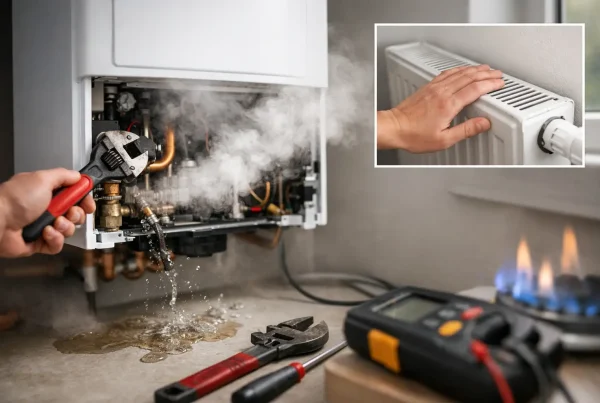
The key question is whether the pressure stays there. Pressure that repeatedly drops can point to a leak on the heating system, a faulty pressure relief valve or an issue with the expansion vessel. Water beneath the boiler, around radiator valves or at pipe joints should not be ignored. Do not keep topping up the system every few days, as this can introduce fresh water and speed up internal corrosion.
Boiler is making banging, whistling or gurgling noises
Some noise is normal when a boiler starts and stops. Loud banging, whistling, kettling or persistent gurgling is not. Air in the system, low pressure, a failing pump, limescale, sludge or restricted water flow can all be responsible.
Noise alone does not provide a firm diagnosis. An engineer needs to check circulation, system water quality, pressure and the boiler components before recommending a repair. A power flush may be useful where sludge is confirmed, but it is not the answer to every noisy heating system.
Checks you can make without opening the boiler
Before booking a boiler repair, it helps to have a clear picture of the fault. Check the thermostat setting and timer, confirm the boiler has power, note the pressure reading, look for visible leaks and record any error code. If you have recently changed heating controls, had a power cut or turned radiators off for decorating, mention that too.
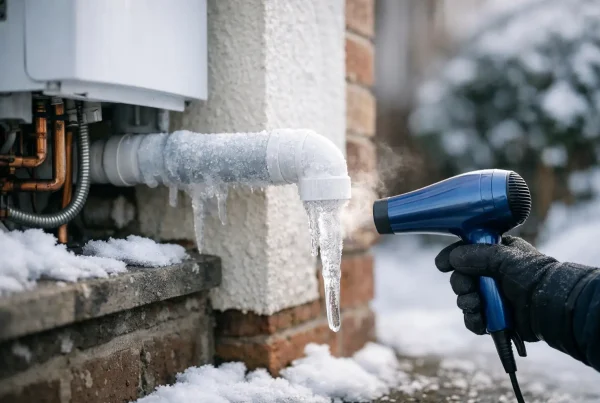
You can also check whether the condensate pipe outside is frozen during very cold weather. This pipe carries water away from a condensing boiler. If it has frozen, the boiler may show a lockout code or refuse to run. Only thaw an accessible external pipe using warm, not boiling, water. Never dismantle pipework or force a reset if you are unsure.
Avoid removing the boiler case, touching internal wiring, adjusting gas settings or taking apart valves and fans. These are not DIY jobs. Apart from the safety risk, unauthorised work can make a fault worse and may affect warranties or landlord responsibilities.
When a boiler fault needs urgent attention
Some faults can wait for a normal appointment. Others need a rapid response, especially when a household has no heating or hot water, a vulnerable resident, young children or a tenant at risk. A boiler leaking water, shutting down repeatedly, losing pressure fast or showing signs of a flue or combustion issue should be assessed promptly.
Landlords have an added duty to keep gas appliances safe and provide a valid gas safety record. A tenant reporting a boiler fault should be taken seriously and acted on quickly. Annual servicing helps identify wear and circulation problems before they become a mid-winter breakdown, but a service does not remove the need for a repair when a fault develops.
What a proper Leeds boiler fault diagnosis involves
A professional diagnosis is more than reading an error code. A Gas Safe engineer will inspect the appliance, listen to the symptoms, check operating pressure and controls, and test the relevant parts safely. Depending on the fault, this can include checking the condensate route, pump operation, ignition sequence, sensors, fan, flue performance, combustion readings and the condition of the wider heating system.
The aim is to identify the actual cause rather than replace parts by guesswork. For example, a boiler that is losing pressure may need a small external leak repaired, while another with identical symptoms may have a faulty internal component. The right repair depends on the test results, the age and condition of the boiler, and whether replacement parts remain sensible value.
For an older boiler with repeated breakdowns, it can be worth comparing the repair cost against a replacement. There is no fixed age at which every boiler should be changed. A straightforward repair on a well-maintained model can be worthwhile, while several costly faults in a short period may make a new, more efficient boiler the better decision.
Help your engineer fix the problem faster
When you call, have the boiler make and model, error code, pressure reading and a brief timeline ready. Explain whether the problem affects heating, hot water or both, and whether it is constant or intermittent. Let the engineer know about any leaking water, unusual noises, recent electrical work or changes to the thermostat.
Clear information saves time and helps bring the right parts where possible. GasPlumb provides practical boiler repairs and emergency support across Leeds, with Gas Safe engineers who can diagnose faults properly and get your heating and hot water back on where a safe repair is possible.
If the boiler is not behaving as it should, do the safe external checks once, then arrange expert help rather than living with an unreliable heating system. A quick, accurate diagnosis is usually the shortest route back to a warm home and dependable hot water.