
A boiler that still produces hot water can have a safety fault you cannot see. That is why asking what is a gas safety inspection matters. It is a professional check by a Gas Safe registered engineer to make sure gas appliances, pipework and flues are operating safely and not putting people at risk from gas leaks, fire or carbon monoxide.
For landlords, it is a legal annual requirement for rented homes with gas appliances. For homeowners, it is not normally a legal duty, but it is a sensible part of looking after a boiler, gas fire, hob or cooker. A proper inspection gives you a clear answer about the condition of your appliances and identifies faults before they become an emergency.
What happens during a gas safety inspection?
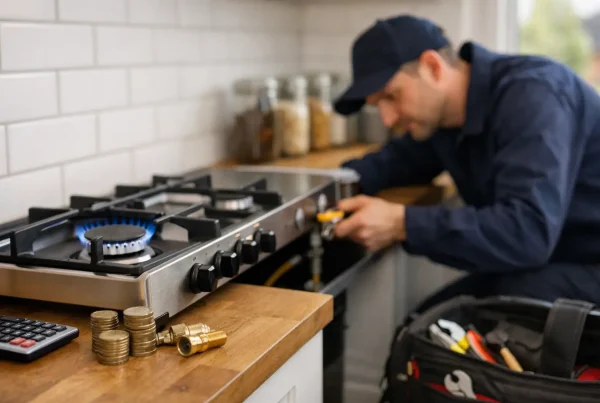
A gas safety inspection is not a quick glance at the boiler. The engineer checks the appliance, its gas supply and the route that combustion gases take out of the property. They will confirm that the appliance is suitable, installed correctly and working within safe limits.
The exact work depends on the appliances in your home. A property with a combi boiler and gas hob needs different checks from one with a boiler, gas fire and cooker. Access also matters. Cupboards, boxed-in pipework and flues may need to be accessible for the inspection to be completed properly.
A Gas Safe registered engineer will typically check that:
- gas appliances are burning gas correctly and safely
- flues and chimneys are clear, secure and safely removing waste gases
- the appliance has adequate ventilation where required
- safety devices are working as they should
- there are no obvious signs of unsafe operation, overheating or poor installation
- gas connections and accessible pipework are sound
- the appliance is operating at the correct pressure and rate where testing is required
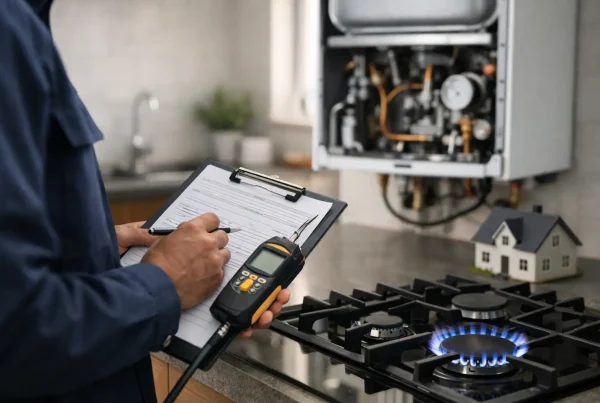
The engineer may use specialist equipment to test for gas tightness and analyse combustion. These are not checks that should be left to a general handyman or attempted yourself. Gas work must be carried out by an appropriately qualified Gas Safe registered engineer.
Is a gas safety inspection the same as a boiler service?
They are closely related, but they are not exactly the same thing.
A gas safety inspection is focused on whether an appliance is safe to use. It is particularly important for legal compliance in rented properties. A boiler service goes further into the condition and performance of the boiler. It usually includes cleaning key components where needed, checking wear, testing operation and helping to keep the boiler efficient and reliable.
For a landlord, an annual gas safety check is mandatory where gas appliances are supplied in the property. A boiler service may be carried out at the same appointment, but it should not be assumed that one automatically covers the other. Ask what is included and make sure the paperwork reflects the work completed.
For homeowners, annual boiler servicing is often the more practical starting point. It helps spot developing faults, supports manufacturer warranty conditions on many boilers and reduces the chance of losing heating or hot water when you need it most. If you also have a gas fire, cooker or hob, those appliances should be checked too.
When do landlords need a gas safety inspection?
Landlords must arrange a gas safety check every 12 months for gas appliances and flues they provide for tenants. The work must be completed by a Gas Safe registered engineer, and the landlord must receive a Landlord Gas Safety Record. Many people still call this a CP12 certificate.
A copy must be given to existing tenants within 28 days of the check. New tenants must receive a copy before they move in. Landlords also need to keep records for at least two years.
This applies whether you own one buy-to-let property or manage a larger portfolio. It is not something to leave until a tenant reports a fault. An expired record can create legal problems, affect insurance arrangements and, more importantly, leave people exposed to a serious safety risk.
There are a few situations where responsibility can be less straightforward. For example, if a tenant owns and installed their own gas appliance, the landlord may not be responsible for that appliance itself. However, the installation, shared flue or associated pipework could still need attention. If there is any doubt, get clear advice from a Gas Safe engineer rather than making assumptions.
Do homeowners need one every year?
Homeowners are not generally required by law to have an annual gas safety inspection. But annual servicing and regular safety checks are strongly recommended, especially for boilers that are used daily through autumn and winter.
The right timing can depend on the appliance. A boiler should normally be serviced once a year. A gas fire should also be checked annually because of its flue and ventilation requirements. A cooker or hob may not need the same servicing work as a boiler, but it should be inspected if it has been newly installed, is showing faults, smells of gas, has damaged connections or has not been checked for a long time.
Do not wait for the annual appointment if something changes. Yellow or orange flames instead of crisp blue flames, black marks around an appliance, repeated pilot light failures, unusual smells, headaches or dizziness around a gas appliance all need prompt attention.
What paperwork will you receive?
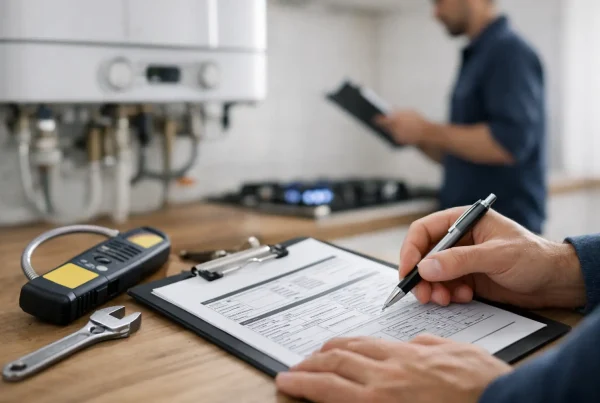
For a rental property, the engineer will provide the Landlord Gas Safety Record once the required checks are complete. This records the appliances checked, the property details, the engineer’s Gas Safe registration details, any defects found and the date the next check is due.
For a homeowner, you should still receive clear service or inspection paperwork. Keep it with your boiler documents. It creates a useful maintenance history, can help when dealing with warranty queries and gives a future engineer a better picture of previous work.
Paperwork does not make an unsafe appliance safe by itself. If an engineer identifies a fault, ask them to explain what has been found, how urgent it is and what needs to happen next. A good engineer will give you a plain answer, not bury you in technical terms.
What if an appliance fails the inspection?
If an appliance is unsafe, the engineer may label it as at risk or immediately dangerous, depending on the fault. An immediately dangerous appliance must not be used. It may be disconnected or capped off to protect everyone in the property.
That can be inconvenient, particularly if it is your boiler in cold weather. But continuing to use unsafe gas equipment is never worth the risk. The next step is to arrange the repair, replacement or further investigation needed to put the issue right.
Not every failed check means you need a new boiler. Sometimes the issue is a damaged seal, poor ventilation, a flue problem, incorrect pressure or a component that can be repaired. The outcome depends on the appliance’s age, condition, availability of parts and the nature of the fault. Where a replacement is the better value option, an engineer should explain why rather than simply pushing the most expensive route.
Carbon monoxide alarms are part of the picture
A carbon monoxide alarm is not a substitute for having gas appliances checked, but it is an essential extra line of warning. In England, landlords must provide a carbon monoxide alarm in any room used as living accommodation that contains a fixed combustion appliance, excluding gas cookers. The alarm should be tested and maintained in line with the manufacturer’s instructions.
Homeowners should fit alarms too, particularly near boilers, gas fires and other fuel-burning appliances. Place them as instructed by the manufacturer, not directly beside the appliance or in a spot where steam and cooking fumes are likely to cause false alarms.
If a carbon monoxide alarm sounds, get outside into fresh air, call the gas emergency service on 0800 111 999 and seek medical advice if anyone feels unwell. Do not go back inside until it is safe to do so.
Choosing the right engineer
Always check that the engineer is Gas Safe registered and qualified for the type of work required. Gas Safe registration is not a marketing extra. It is the basic standard for legal and safe gas work in the UK.
For landlords in Leeds, booking the annual check before the due date avoids rushed appointments and gaps in compliance. For homeowners, arranging a boiler service before the colder months gives you a better chance of dealing with faults before the heating is under real pressure.
Gas safety is one of those jobs that is easy to postpone when everything appears to be working. Booking a proper inspection while your appliances are still running normally is usually simpler, safer and far less disruptive than dealing with a breakdown or gas emergency later.