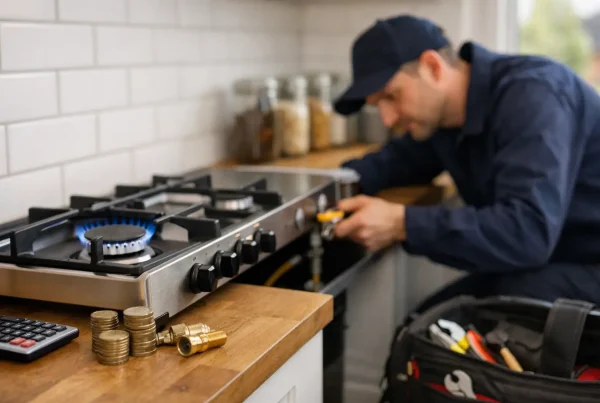

A new cooker often looks like a simple swap. Old one out, new one in, job done. In reality, gas cooker connection rules exist for a reason, and getting them wrong can leave you with a dangerous appliance, an invalid warranty, or a property that is not legally compliant.
If you are replacing a gas cooker at home or sorting one out in a rental property, the key point is straightforward. Any connection, disconnection or installation work involving the gas supply must be carried out by a Gas Safe registered engineer. That is not a box-ticking exercise. It is the line between a safe installation and one that puts people and property at risk.
Why gas cooker connection rules matter
A gas cooker is not just another kitchen appliance. It burns fuel inside your home, often close to cupboards, worktops and other fittings that can be affected by heat, poor ventilation or incorrect clearances. A small gas leak may not be obvious at first, and poor combustion can create carbon monoxide without much warning.
The rules are there to make sure the cooker is connected properly, tested properly and suitable for the space it is going into. They also cover practical details people often overlook, such as whether the isolation valve is accessible, whether the hose is the right type and length, and whether nearby materials are safe at operating temperatures.
For landlords, there is an added layer. You are responsible for gas safety in the property. If a cooker is landlord-owned, it needs to be maintained in a safe condition and included where required in ongoing gas safety checks. If a tenant brings their own cooker, responsibilities can become more specific, but the gas supply and any associated pipework still need proper attention.
Who can legally connect a gas cooker?
Under UK gas safety law, anyone carrying out gas work as part of their business must be Gas Safe registered and competent for that type of appliance. In plain terms, if a cooker is being installed, connected, disconnected and reconnected, or tested as part of the job, it should be done by a qualified gas engineer with the right registration.
That applies whether the cooker is freestanding or integrated, and whether it is natural gas or LPG. It also applies if the job looks minor. Reusing an old bayonet fitting, altering pipework slightly, or moving the appliance position can all affect safety.
This is where people can get caught out. Delivery teams may place the appliance in the kitchen, but that does not mean they are authorised to connect it. A general handyman is not automatically allowed to do gas work either. You need someone properly registered for gas cooker installation.
The main gas cooker connection rules homeowners should know
The most important rule is simple: the installation must be safe for the appliance, the property and the people using it. That sounds obvious, but it covers quite a lot in practice.
The cooker must be suitable for the gas type at the property. Natural gas and LPG appliances are not interchangeable unless they are specifically designed or converted for the correct fuel. The installation also needs an appropriate isolation valve so the gas supply can be turned off safely when needed.
If the cooker uses a flexible hose, that hose must be the correct type and must not be kinked, stretched, trapped or routed where it can be damaged by heat or movement. There are also limits on length and positioning. The appliance needs to sit correctly and remain stable. If it is designed to be fitted with a stability chain or bracket, that should be in place.
Clearances matter as well. Gas cookers and hobs need enough space from combustible surfaces and surrounding units. The manufacturer’s instructions are a big part of this. One model may be suitable in a tighter space, while another needs more room above or to the sides. There is no sensible shortcut here. The appliance instructions and current regulations both need to be followed.
Ventilation is another point that depends on the appliance and room size. Not every kitchen needs extra vents just because a gas cooker is installed, but the room still has to be suitable for safe use. If extraction fans are present, they should not interfere with combustion or create other issues.
What a proper installation should include
A proper job is more than connecting a hose and turning the gas back on. The engineer should check that the appliance is suitable, inspect the existing gas point and pipework, and confirm the location meets the required standards.
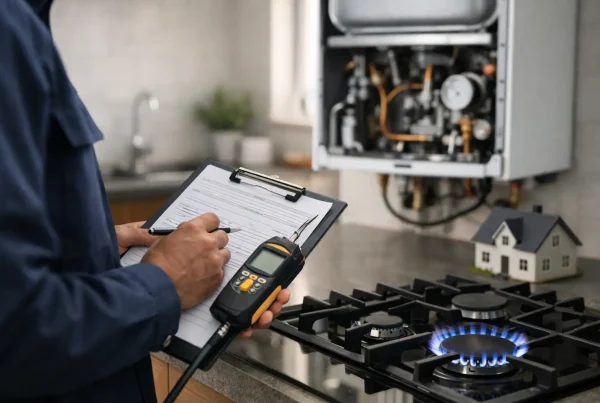
Once connected, the installation should be tested for gas soundness. The cooker should also be checked for burner operation, flame picture and safe combustion where applicable. If there are defects with the existing supply arrangement, the engineer should flag them rather than work around them.
In some homes, fitting a new cooker reveals older issues. The bayonet may be worn, the emergency control valve may be in a poor position, or the pipe sizing may not be ideal if other gas appliances are running on the same system. That does not mean every cooker change becomes a major job, but it does mean the engineer has to assess what is there rather than assume it is fine.
For that reason, the cheapest quote is not always the best one. A proper installation takes time because it includes the checks that keep the household safe.
Gas cooker connection rules for rented properties
For landlords, gas cooker connection rules are tied directly to legal responsibilities. If you provide the cooker, you are generally responsible for making sure it is installed safely and maintained in safe working order. You also need to make sure required annual gas safety checks are carried out.
If the tenant owns the cooker, the position can be narrower, but the fixed gas installation in the property remains the landlord’s responsibility. If there is any doubt about who supplied the appliance, it is worth getting that clarified in writing and keeping records of installation and safety work.
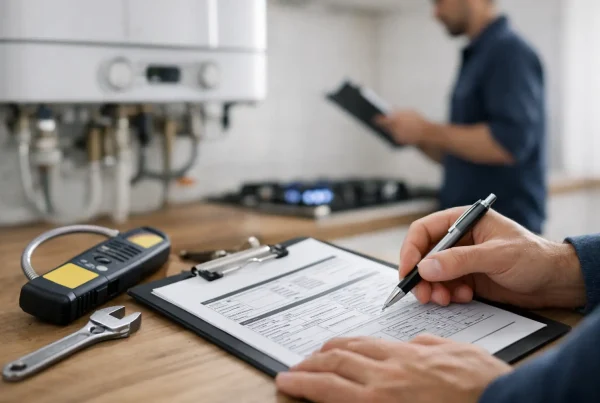
A common mistake is assuming an old cooker can stay in place indefinitely because it still lights. Age alone does not make an appliance unsafe, but wear, poor previous installation and lack of servicing can all increase the risk. For landlords, records matter almost as much as the work itself. If there is ever a dispute or incident, paperwork showing a proper Gas Safe installation and inspection is essential.
Common problems that stop a cooker being safely connected
Some jobs are straightforward. Others stall because the kitchen setup is not suitable. The gas point may be in the wrong place for the new appliance. The hose route may be unsafe. Nearby units may be too close, or a splashback and worktop arrangement may clash with the manufacturer’s clearance requirements.
Older kitchens can be especially awkward. A cooker recess built for a previous model may not suit a modern one, even if the width looks the same. A 60cm slot does not guarantee a safe fit once side panels, handles, lids and wall finishes are taken into account.
There are also cases where a customer has bought a second-hand cooker with no manual, no clear gas type information, or visible damage. An engineer cannot just guess. If the appliance cannot be identified properly or shown to be suitable, the right decision may be not to connect it.
That can be frustrating on the day, but it is better than ending up with a dangerous installation.
Can you connect it yourself?
For most householders, the sensible answer is no. Gas work is not the place for trial and error. Even if an online video makes it look easy, it does not show the full safety checks, legal responsibilities or appliance-specific requirements.
People sometimes assume that plugging in a bayonet hose is a DIY task. It is still part of the gas installation, and if anything is worn, wrongly fitted or leaking, the consequences can be serious. If the cooker also needs levelling, securing, checking for correct operation and confirming safe clearances, it quickly goes beyond what a non-qualified person should be doing.
The cost of a proper installation is small compared with the risk of gas leaks, fire, carbon monoxide, property damage or invalid insurance claims.
Choosing the right engineer for the job
When booking a cooker installation, ask whether the engineer is Gas Safe registered for cookers, not just gas work in general. It is also worth checking what is included. Some jobs only cover a straightforward like-for-like connection where the existing setup is already compliant. Others may need extra work, such as replacing a hose, fitting a chain, changing the bayonet, or correcting the pipe position.
If you are in Leeds and want the job handled properly, GasPlumb can check the setup, install the cooker safely and flag any issues before they become a bigger problem. That is usually the quickest way to avoid delays, repeat visits and last-minute surprises in the kitchen.
A gas cooker should give you reliable everyday use, not nagging doubts every time you turn a burner on. If there is any uncertainty about the appliance, the pipework or the existing connection, get it checked and fitted properly before anyone starts cooking.