
A boiler rarely picks a convenient time to stop working. It is usually on a cold morning, before work, or when a family needs hot water. Knowing the top causes of boiler breakdowns helps you spot trouble early, arrange the right repair and avoid being left without heating when you need it most.
Some faults are simple and inexpensive to put right. Others point to wear inside the boiler or a problem elsewhere in the heating system. Either way, do not ignore changes in how your boiler sounds, heats or holds pressure. Small warning signs can quickly turn into a full breakdown.
The top causes of boiler breakdowns
Lack of annual servicing
Missed servicing is one of the most common reasons boilers become unreliable. During a proper annual service, a Gas Safe engineer checks that the boiler is burning fuel safely, examines key components, tests controls and looks for developing faults. This gives you a chance to deal with worn parts before they fail completely.
A service cannot prevent every repair, especially on an older boiler, but it can make a real difference to reliability and safety. It also keeps the manufacturer warranty valid on many newer models. For landlords, an annual gas safety check is a legal requirement, but a boiler service is still a separate and worthwhile job.
If your boiler has not been serviced for more than a year, booking it before winter is sensible. Waiting until it fails can mean a more urgent repair and a colder house.
Low boiler pressure
Most sealed central heating systems need the pressure gauge to sit in the range marked by the manufacturer, often around 1 to 1.5 bar when the system is cold. If pressure falls too low, the boiler may lock out and stop supplying heating or hot water.
A one-off pressure drop can sometimes be corrected by carefully repressurising the system using the filling loop, following your boiler instructions. Repeated pressure loss is different. It may be caused by a leak on a radiator valve, pipework or within the boiler itself. It can also indicate a fault with the expansion vessel or pressure relief valve.
Do not keep topping up the pressure every few days and assume the problem is solved. Adding water repeatedly can introduce oxygen to the system, which encourages corrosion. A qualified engineer should find the reason the pressure is dropping.
Frozen condensate pipes
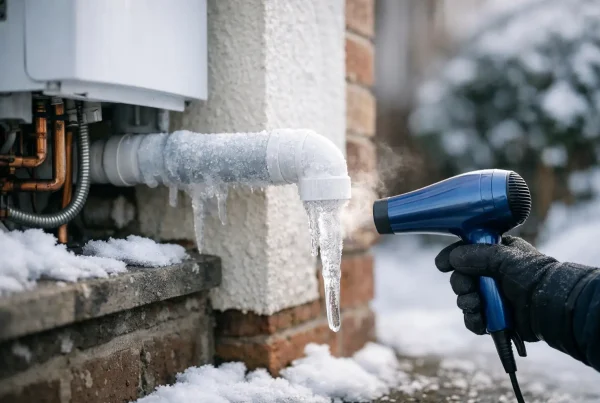
Condensing boilers produce acidic water known as condensate, which runs away through a small pipe. If that pipe is outside or passes through a cold area, it can freeze during a sharp cold spell. The blockage prevents the boiler from operating and often causes a lockout code to appear.
This is particularly common in winter when the boiler is working hardest. You may hear gurgling sounds, notice the boiler has stopped after a freezing night, or find a fault code on the display.
If it is safe to reach and clearly just an external plastic condensate pipe, gentle warming with warm water can sometimes thaw it. Never use boiling water, a naked flame or force the pipe. If you are unsure, or the boiler does not restart once the pipe is clear, arrange a professional repair. Insulating an exposed condensate pipe can reduce the risk of the same issue returning.
Sludge, limescale and dirty system water
Your boiler may be working properly, but the water circulating through the radiators may not be. Over time, corrosion inside older systems produces a dark sludge that settles in radiators, pipework and boiler components. In hard-water areas, limescale can also affect heat exchangers and reduce efficiency.
Common signs include cold patches at the bottom of radiators, radiators taking a long time to warm up, banging or kettling noises, and rooms that never heat evenly. Left untreated, dirty water can restrict circulation and put added strain on the pump and heat exchanger.
The right treatment depends on the condition of the system. A chemical clean may be enough in some homes. More heavily contaminated systems may need a powerflush. It is not a job to choose by guesswork, as an engineer should assess the system first. Once cleaned, a magnetic filter and inhibitor can help protect the boiler from future debris.
Failed parts inside an ageing boiler
Every boiler contains components that wear with use. Pumps, fans, diverter valves, sensors, electrodes and printed circuit boards can all fail eventually. The older the boiler, the more likely it is that a fault is linked to normal wear rather than one isolated external issue.
Symptoms vary. The heating may work but hot water may run cold. The boiler may fire up and cut out. You may hear unusual humming, clicking or whistling, or see an error code that keeps returning after a reset.
Repairs are often worthwhile where the boiler is otherwise in good condition and replacement parts are available. There comes a point, however, when repeated repairs on an inefficient older model cost more than they should. An engineer can give you an honest view based on the boiler’s age, condition, repair cost and expected lifespan. Replacing a boiler is not always the immediate answer, but neither is spending money on faults that will keep coming back.
Problems with the thermostat or heating controls
A boiler can appear to have broken down when the real fault is with the controls telling it what to do. Flat batteries in a wireless thermostat, an incorrect programme, a tripped fused spur or a faulty motorised valve can all leave radiators cold.
Before arranging a callout, check that the thermostat is turned up above the room temperature, the timer is set correctly and the boiler has power. If you have recently changed the clocks, check the programme has not shifted. These quick checks can save time, but do not remove boiler panels or attempt electrical repairs yourself.
Modern smart controls can improve comfort and reduce wasted heating, but they still need to be installed and set up properly. If controls are unreliable, an engineer can establish whether the issue sits with the thermostat, wiring, valve or boiler.
Leaks and circulation faults
A small leak under the boiler, around a radiator or at a pipe joint should never be ignored. Even a slow drip can lead to falling pressure, damage to flooring or cupboards, and corrosion in the heating system. Leaks inside the boiler need particular attention because water and electrical components do not mix.
Circulation faults may also stem from a seized pump, stuck valve or air trapped in the system. You might find some radiators heating while others remain cold, or the boiler may overheat and switch itself off. Bleeding radiators can release trapped air, but frequent air in the system may mean there is an underlying fault that needs investigation.
Poor installation or an unsuitable boiler
Not every breakdown is caused by age. Problems can start sooner when a boiler was poorly installed, incorrectly sized or connected to old system pipework without suitable protection. An undersized boiler may struggle to meet hot water demand, while an oversized one can cycle on and off more than necessary.
A new boiler should be matched to the property, the number of bathrooms, household hot water use and the condition of the existing heating system. A proper installation includes commissioning, correct controls and system protection. The cheapest quote is not always the best value if important work has been left out.
When a boiler fault is an emergency
A boiler that has simply stopped heating is inconvenient, but certain signs need immediate action. Turn the boiler off if you smell gas, feel unwell with headaches or nausea, see soot marks, or suspect a carbon monoxide problem. Open windows and doors if safe to do so, leave the property and contact the National Gas Emergency Service on 0800 111 999. Do not use electrical switches, flames or appliances near a suspected gas leak.
For leaks, place a container underneath only if it is safe and switch off the water supply if you know where the stop tap is. Do not take the boiler casing off. Boiler repairs and gas work must be carried out by a Gas Safe registered engineer.
Reduce the chance of a winter breakdown
The most useful habit is simple: have your boiler serviced annually, ideally before cold weather arrives. Keep an eye on pressure, deal with minor leaks promptly and do not ignore new noises or uneven radiators. Running the heating occasionally during warmer months can also help identify problems before the first cold snap.
For Leeds homeowners and landlords, fast help matters when heating or hot water fails. GasPlumb can diagnose boiler faults, carry out repairs and advise clearly when maintenance or replacement is the better option. Acting at the first sign of trouble gives you the best chance of keeping the house warm and the repair straightforward.