
An overflow pipe dripping outside is easy to ignore, especially if it is only a slow, regular drip. But it is usually a sign that something inside the plumbing or heating system is not working as it should. Left alone, a small drip can waste water, stain brickwork, cause pressure problems and turn into a more expensive repair.
The first job is working out which pipe is dripping. Older properties may have several pipes leaving the wall, and each one points to a different fault. Some are connected to the boiler, while others serve a toilet cistern or cold-water storage tank. A quick, professional diagnosis stops guesswork and makes sure the right repair is carried out.
What an overflow pipe dripping outside can mean
A pipe that releases water outdoors is designed to do so when a system needs to relieve excess water or pressure. It is a safety route, not a drain that should run all the time. The cause depends on where the pipe comes from and when it drips.
If the pipe is copper and runs through the wall close to your boiler, it may be the boiler pressure relief pipe. This should normally be dry. Dripping from this pipe often means the boiler pressure is getting too high, or that the pressure relief valve is no longer closing fully.
If the water comes from a white plastic pipe below the boiler and only appears when the boiler is running, it could be the condensate pipe. Condensate is normal boiler waste water, although it should generally discharge into a suitable drain rather than drip over a path or wall. It is worth having this checked if the flow has changed, the pipe is leaking at a joint, or the boiler is showing a fault code.
A pipe high up on an outside wall may be linked to a loft tank or toilet cistern. In these cases, the usual issue is a faulty float valve allowing the tank or cistern to overfill. The water may be clean, but constant overflow is still a waste and can indicate that a valve needs replacing.
Boiler pressure problems are a common cause
For homes with a combi boiler or sealed central heating system, a dripping pressure relief pipe is one of the more common causes of concern. Check the pressure gauge when the heating is cold. Most systems sit at roughly 1 to 1.5 bar when cold, although the correct level can vary by boiler model.
As the heating warms up, the pressure will rise slightly. That is normal. It should not climb close to 3 bar or release water outside. If it does, the boiler is protecting itself by opening the pressure relief valve.
This can happen for several reasons. The expansion vessel may have lost its air charge or failed internally, leaving nowhere for heated water to expand. The filling loop may be letting water into the system even though it appears closed. In some cases, the pressure relief valve itself has become worn or has debris caught in it, so it continues to weep after opening.
These faults need the right checks rather than repeated topping-up. If you keep repressurising a boiler that is losing water through the overflow pipe, you can create a cycle of high pressure, discharge and low pressure. It may keep the heating going for a short time, but it does not fix the problem.
A useful pressure check at home
If it is safe to access your boiler, note the pressure when the system is cold, then check it again after the heating has been on for an hour or so. A significant rise points towards an expansion vessel or pressure-control issue. If the gauge is already near or above 3 bar, switch the boiler off and arrange for a qualified heating engineer to inspect it.
Do not remove the boiler casing, interfere with internal valves or block the pipe outside. The discharge pipe is a safety feature. Capping it can create a more serious problem inside the boiler.
When the drip is coming from a tank or toilet
Not every outside overflow is a boiler fault. Many older homes have a cold-water storage tank in the loft, and some toilet cisterns are connected to an external overflow pipe. If water is running from one of these pipes, the likely fault is a worn float valve, sometimes called a ball valve.
The valve is meant to stop the water supply once the tank or cistern reaches the correct level. When it fails, the water keeps entering until it reaches the overflow outlet. You may also hear a constant hissing sound from the toilet or notice that it refills when nobody has flushed it.
A toilet overflow can waste a surprising amount of water over a day. A loft tank overflow can be harder to spot, particularly if the pipe exits near the roofline. It is still worth dealing with promptly, as the fault may worsen and water can find its way into the property if the overflow arrangement is restricted or damaged.
What you can safely do before calling an engineer
Start by looking at the pipe from a safe position. You do not need to climb ladders or dismantle anything. Note whether it is copper or plastic, whether it comes from near the boiler or higher up the building, and whether it drips constantly or only when the heating is running.
For a suspected boiler issue, check the pressure gauge and make a note of any fault code on the display. Also look at the filling loop beneath the boiler. If it has a lever or two valves, make sure they are fully closed. Do not force stiff valves, and do not attempt to drain the boiler unless you know exactly what you are doing.
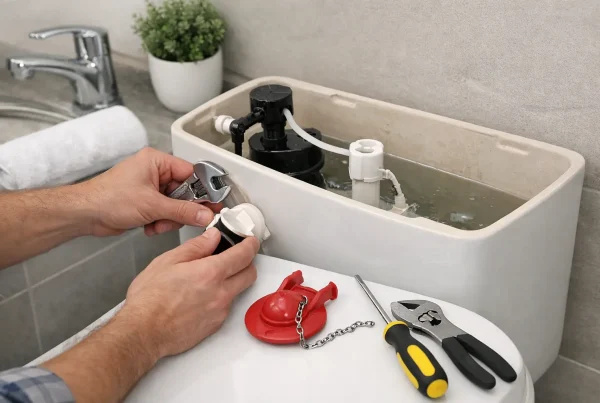
For a suspected toilet issue, remove the cistern lid carefully and see whether water is flowing continuously into the overflow. If it is, you can usually isolate the toilet using the small service valve on the water supply pipe. Turn it gently with a flat screwdriver only if the valve is accessible and in good condition. If there is any doubt, leave it alone and arrange a repair.
Avoid these common mistakes:
- Do not cap, plug or bend the outside pipe to stop the water.
- Do not keep adding pressure to a boiler that repeatedly loses it.
- Do not open a boiler case or attempt a repair on gas appliances yourself.
- Do not ignore water dripping close to electrical cables, sockets or external equipment.
When it needs urgent attention
A slow drip is not always an emergency, but it should not be treated as normal. Call for prompt help if the water is hot, the boiler pressure is rising rapidly, the boiler has stopped working, or water is running heavily rather than dripping. A large discharge can make paths slippery and may indicate that the heating system is under excessive pressure.
If the boiler is leaking internally, there is water around electrics, or you cannot keep the system at a stable pressure, turn the boiler off and seek professional advice. If you smell gas at any point, do not try to diagnose the boiler. Turn off the gas supply if it is safe to do so, ventilate the property, avoid electrical switches and contact the gas emergency service immediately.
Landlords should also act quickly. A dripping overflow linked to a boiler may affect the reliability of the heating and hot-water supply, while a faulty tank or cistern can waste water and lead to tenant complaints. Keeping a record of the fault, repair and any boiler pressure readings is sensible property management.
Getting the right repair, not a temporary fix
The proper repair depends on the source of the water. A boiler pressure fault may need the expansion vessel recharged or replaced, the filling loop repaired, or a new pressure relief valve fitted. A tank or toilet overflow may only require a new float valve or washer. The parts can be straightforward, but identifying the cause correctly is what prevents the drip returning.
GasPlumb engineers can trace the pipe, test the heating system safely and explain the repair before work starts. For homeowners in Leeds, that means one local team for boiler pressure faults, plumbing repairs and the checks needed to get heating and hot water back to normal.
A dry overflow pipe is the sign you are looking for. Once the fault is repaired, check it again over the next day or two, particularly after the heating has been running, so you can be confident the system is holding pressure and working as it should.