
If your boiler is breaking down again, heating the house unevenly, or pushing your energy bills up for no good reason, replacing it is often the cheaper option in the long run. New Boiler Installation Leeds is usually less about fancy upgrades and more about getting dependable heating, hot water and peace of mind back without delay.
A lot of homeowners wait too long. They keep paying for repairs, putting up with low pressure, odd noises or radiators that never quite warm up properly. Then the boiler fails at the worst possible time. If that sounds familiar, it helps to know what a new installation actually involves, what affects the price, and how to make sure the job is done safely and properly.
When a new boiler makes more sense than another repair
Not every fault means replacement. Some boilers are well worth repairing, especially if the issue is minor and the unit is still fairly modern. But there comes a point where another callout stops being value for money.
If your boiler is more than 10 to 15 years old, needs repeated repairs, struggles to heat the property evenly, or parts are becoming difficult to source, a replacement starts to look like the sensible option. The same applies if your gas bills have crept up while performance has dropped. An older boiler can keep running, but that does not mean it is running efficiently.
For landlords, there is also the practical side. A boiler that keeps failing creates complaints, callouts and avoidable disruption for tenants. For families, the issue is usually simpler – nobody wants to be without hot water or heating, especially in winter.
Choosing the right setup for New Boiler Installation Leeds
The right boiler depends on the property, the number of bathrooms, the demand for hot water and the condition of the existing heating system. This is where a proper assessment matters. The cheapest boiler is not always the cheapest job overall, and the biggest boiler is not automatically the best one either.
Combi boilers
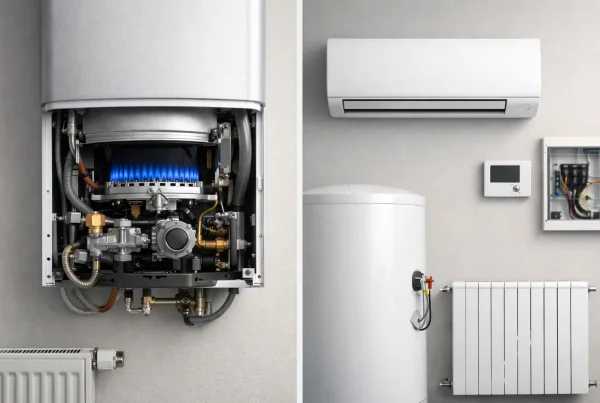
Combi boilers are a popular choice for many homes because they provide heating and hot water directly from the mains without a separate hot water cylinder. They suit properties with limited space and households that want a straightforward system.
That said, they are not perfect for every home. If several people need hot water at the same time in a larger property, a combi can struggle compared with a system designed for higher demand.
System boilers
System boilers work well in homes with more than one bathroom or higher hot water usage. They use a cylinder for stored hot water, which can make daily demand easier to manage. They also tend to suit larger family homes better than a basic combi setup.
Regular boilers
Regular boilers are often found in older properties with traditional heating systems. In some cases, keeping a similar setup makes sense. In others, converting to a combi or system boiler can free up space and improve efficiency. The right route depends on pipework, water pressure and how much disruption you want during installation.
What affects the cost
People usually want one figure, but boiler installation is not priced that simply. The boiler itself is only one part of the job. Labour, controls, system cleaning, flue work, filter fitting and any changes to pipework all affect the final cost.
A straightforward boiler swap in the same location is usually quicker and cheaper than moving the boiler to a new position or changing the system type. If the existing pipework is in poor condition, or the heating system needs power flushing or significant upgrades, the price rises for good reason. Cutting corners on these parts often causes problems later.
It is also worth looking at value rather than headline price. A proper installation with suitable controls and system protection can save money over time by improving efficiency and helping prevent faults. That is why offers that include practical extras, such as a wireless room thermostat and filter, can make a genuine difference rather than just sounding good on paper.
How long installation usually takes
In many homes, a standard like-for-like boiler replacement can be completed in a day. If the work involves changing the boiler type, relocating it, upgrading controls or correcting issues with the wider heating system, it may take longer.
A good installer should explain this clearly before work begins. Most customers do not care about the technical detail. They want to know when the heating will be off, how much disruption to expect, and whether the house will be left tidy afterwards. Fair enough. That is the practical side that matters when you are living in the property during the work.
What should happen on installation day
A proper boiler installation should not feel chaotic. The engineer should isolate and remove the old boiler safely, install the new unit to current standards, connect and test the system, check gas pressures, inspect flue arrangements, and make sure the controls are set up correctly.
The system should also be cleaned or protected as needed. This part is easy to overlook, but it matters. Sludge and debris in an older central heating system can shorten the life of a new boiler if they are not dealt with. Fitting a magnetic filter and using inhibitor helps protect the new setup from day one.
Once installed, the engineer should commission the boiler properly and show you how to use the controls. That includes basic settings, pressure checks and anything you need to know for day-to-day use. If the explanation is rushed or unclear, ask questions. You are paying for a working heating system, not just a box on the wall.
Why Gas Safe installation matters
Any gas appliance must be installed by a Gas Safe registered engineer. That is not a nice extra. It is the legal and safety standard.
A badly installed boiler can lead to gas leaks, poor performance, repeated faults and serious safety risks. It can also affect warranty cover and create problems if the work was not properly notified or documented. For landlords, this has an obvious compliance angle. For homeowners, it comes down to protecting the household and avoiding expensive mistakes.
Experience matters too. On paper, many installations can look simple. In reality, older homes, awkward pipe routes, poor previous work and tired heating systems often create issues that only become obvious once the job starts. That is where an experienced local engineer earns their keep.
Smart controls and efficiency improvements
If you are replacing a boiler, it is worth thinking beyond the boiler itself. Controls have a big impact on comfort and running costs. A wireless room thermostat gives you better control over heating times and temperatures, and makes it easier to heat the home properly without waste.
In some homes, upgrading thermostatic radiator valves or balancing the radiators can improve performance just as much as the boiler change itself. This is where honest advice matters. Sometimes the best result comes from a few sensible system improvements rather than simply fitting the most expensive boiler available.
Common mistakes to avoid
The biggest mistake is choosing on price alone. Everyone wants a fair quote, but a very cheap installation can mean corners are being cut on system cleaning, filter protection, controls or commissioning. Those are usually the details that come back to bite later.
Another mistake is picking the wrong size boiler. Oversized and undersized boilers both cause problems, just in different ways. You want a boiler suited to the property and how the household actually uses hot water and heating.
It is also a mistake to ignore the wider condition of the system. New boiler, old problems is a common story. If radiators, valves or pipework are contributing to poor performance, they need to be looked at at the same time.
What local customers usually want from the job
Most people are not looking for a lesson in heating engineering. They want a clear quote, a boiler that suits the house, an installation date that is not weeks away, and confidence that the work will be done properly. They also want someone who turns up, communicates clearly and does not disappear when there is a question afterwards.
That is exactly why local service matters. A company working in and around Leeds knows the housing stock, the common heating setups and the urgency that comes with lost heating or hot water. For many households, that practical reliability matters more than anything else.
If you are weighing up a replacement, the best next step is a proper assessment of the current boiler, the heating system and the property’s hot water demand. A good installer will keep it simple, tell you what is worth doing, and make sure the new boiler gives you one less thing to worry about.