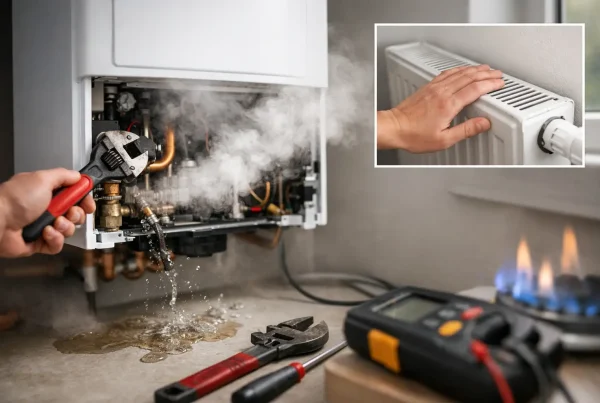

You turn the tap on and get hot water straight away, but the radiators stay cold. If your heating isn’t working but the hot water is, that usually points to a fault affecting the heating side of the system rather than the whole boiler. That is good news in one sense – it often narrows the problem down quickly.
The next step is working out whether it is something simple, such as a setting or control issue, or whether a part inside the boiler or heating system has failed. Some checks are safe to do yourself. Others need a qualified heating engineer, especially where gas appliances are involved.
Why heating doesn’t work while hot water does
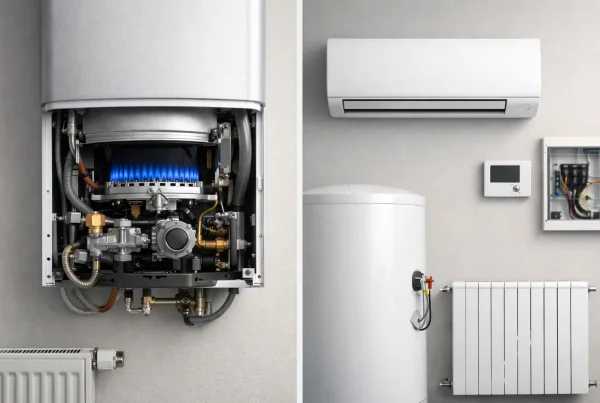
On most modern systems, the boiler can heat water for your taps and also send hot water around the central heating circuit. If one works and the other does not, the boiler is not necessarily completely broken. It may still be firing, but not being told to heat the radiators, or it may be struggling to move heat through the heating circuit properly.
In practical terms, the fault usually sits in one of three places. It can be the controls, such as the thermostat, timer or programmer. It can be a system component, such as a motorised valve, pump or stuck radiator valve. Or it can be an internal boiler part, such as a diverter valve on a combi boiler.
That is why the symptoms matter. A system that has no heating at all needs a different diagnosis from one where only some radiators are cold, or one where the heating comes on briefly and then cuts out.
Start with the simple checks
Before assuming the boiler needs a repair, check the basics properly. It sounds obvious, but heating controls are one of the most common reasons for a no-heat callout.
Make sure the programmer is actually set to heating on, not hot water only. If you have recently had a power cut, changed the clocks or replaced batteries in a wireless thermostat, settings may have reset. Turn the room thermostat up well above the current room temperature and give the system a few minutes to respond.
If you have thermostatic radiator valves, check that they are open on the radiators you are testing. A radiator turned down to zero can make it seem like the whole system is failing when the issue is more localised.
It is also worth checking the boiler pressure if you have a sealed system. Many boilers run best around 1 to 1.5 bar when cold, though the correct range depends on the model. If pressure is too low, the boiler may refuse to heat the radiators properly. Only top it up if you know how to do it correctly and your manufacturer instructions allow for it.
Common causes when hot water works but heating does not
Faulty room thermostat or programmer
If the boiler is producing hot water but never responds to a heating demand, the controls are a strong suspect. A faulty thermostat may fail to send the signal for heat. A programmer can also fail internally, even if the display still appears normal.
Wireless controls add another layer. Flat batteries, pairing issues or signal loss between thermostat and receiver can stop the heating from coming on. In some homes, this fault appears intermittent, which makes it frustrating to pin down without testing.
Stuck motorised valve
On conventional and system boilers with separate hot water cylinders, a motorised valve often directs heated water either to the hot water cylinder, the heating circuit, or both. If that valve sticks in the hot water position, you can still get hot taps while the radiators stay cold.
This is a very common fault. Sometimes the valve motor fails. Sometimes the valve body sticks. Either way, it usually needs an engineer to test and repair or replace it.
Diverter valve problems on a combi boiler
If you have a combi boiler, a diverter valve switches between domestic hot water and central heating. When it sticks or fails, the boiler may prioritise hot water but not send heat to the radiators.
This can show up in different ways. You might have perfect hot water and no heating at all, or heating that works only occasionally. On some boilers, you may also hear the boiler fire up but the radiators never warm through.
Circulating pump faults
The pump moves hot water around the heating system. If it is not working properly, the boiler may heat water for taps but fail to circulate enough heat through the radiators.
Sometimes the pump has seized. Sometimes it is running weakly or has an electrical fault. You may notice the boiler getting hot quickly and then shutting down, or some pipes warming up while the radiators themselves stay cold.
Low system pressure or air in the system
If pressure has dropped too far, the heating side can struggle or stop. If there is air trapped in radiators, some may remain cold at the top even though others heat up. That said, air in one or two radiators is different from a full heating failure. It is easy to assume they are the same problem when they are not.
Bleeding radiators can help if the issue is localised, but if pressure keeps dropping afterwards, there may be a leak or another system fault that needs attention.
Frozen condensate pipe in cold weather
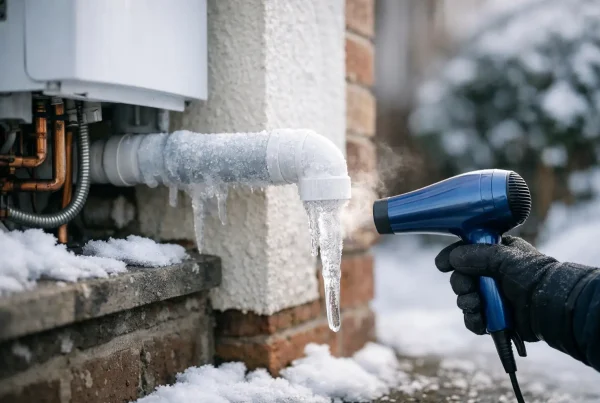
During very cold spells, a frozen condensate pipe can stop a condensing boiler from working properly. Depending on the boiler and fault code, this may affect both heating and hot water, but in some cases customers report patchy operation where one side seems to work better than the other.
This tends to be seasonal and often comes with lockout warnings on the boiler display.
When only some radiators are cold
If the boiler and controls seem to be working but a few radiators stay cold, the fault may be in the system rather than the boiler. Sludge build-up, stuck thermostatic radiator valves, balancing issues or trapped air are all possible.
A radiator cold at the top often suggests air. Cold at the bottom can point to sludge. One radiator staying cold while the rest heat up may simply have a stuck valve pin. If the whole house has no heating, the cause is more likely to be a control, valve or boiler issue.
This matters because the fix can range from a quick valve adjustment to flushing work or component replacement. Guessing usually wastes time.
What you can safely check yourself
There are a few sensible checks a homeowner or landlord can make without taking risks. Confirm the heating is scheduled to come on. Increase the thermostat temperature. Check boiler pressure. Look for obvious fault codes on the display. Make sure radiator valves are open. If one radiator is affected, bleeding it may help.
Beyond that, avoid removing the boiler casing or trying to force internal parts. Gas appliances should only be worked on by a Gas Safe registered engineer. Even if the issue seems minor, the wrong repair can create a much bigger problem.
When to call a heating engineer
If the controls are set correctly, the pressure is within range and the heating still does not work, it is time to get it checked properly. The same applies if the boiler keeps locking out, pressure drops repeatedly, the pump is noisy, or you suspect a motorised or diverter valve fault.
Landlords should move quickly here. If tenants have hot water but no heating in colder months, it is still a serious issue. A fast diagnosis helps avoid longer downtime, repeat visits and unnecessary part swapping.
For homeowners, the practical point is simple. If your heating isn’t working but the hot water is, a proper fault-finding visit is usually faster and cheaper than trying three half-fixes that do not solve it.
Can servicing help prevent this?
Quite often, yes. Annual boiler servicing helps catch worn parts, poor pressure, sludge issues and control faults before they turn into a breakdown. It will not prevent every failure, because valves, pumps and electronics can still go without warning, but it does reduce the odds of being caught out when you need the heating most.
Servicing is also useful where the symptoms are recurring rather than constant. If the heating works one day and not the next, an engineer may spot early signs of a failing component before it stops completely.
A practical way to look at it
When hot water is fine but the heating is not, the boiler is telling you something useful. It is rarely a mystery fault affecting everything at once. More often, it is a problem with controls, circulation or a valve that is no longer switching as it should.
That means there is a good chance of a targeted repair rather than a full system replacement. The key is getting the right diagnosis early, especially in colder weather when waiting only makes the house harder to warm back up. If you are in Leeds and need a dependable heating engineer, GasPlumb can help get to the fault quickly and sort it properly.
If in doubt, trust the symptoms, do the safe checks, and get it looked at before a manageable heating fault turns into a full breakdown.