
A boiler never seems to break at a convenient time. It usually happens on a cold morning, before work, or just as the kids need baths and the house starts to feel freezing. If you need boiler repairs in Leeds, the main thing is speed – but not at the expense of safety. A quick fix only helps if the job is done properly and the fault does not come straight back.
Most homeowners are not interested in boiler theory. They want the heating back on, the hot water running, and a clear answer on what has gone wrong. That is exactly how boiler repair should be approached. The right engineer should be able to identify the fault, explain it in plain English, and tell you whether it makes sense to repair the boiler now or start thinking about replacement.
Common boiler faults in Leeds homes
A lot of boiler problems look the same at first. No heating, no hot water, strange noises, or pressure dropping for no obvious reason. But the cause can vary quite a bit depending on the age of the boiler, the setup of the system, and how well it has been maintained.
Low boiler pressure is one of the most common issues. Sometimes it is a simple top-up. Other times it points to a leak somewhere on the heating system, a faulty pressure relief valve, or a problem with the expansion vessel. If the pressure keeps dropping, topping it up again and again is not really fixing anything.
Pilot and ignition faults are also common, especially on older boilers. If the boiler tries to fire up and fails, the issue could be the ignition lead, the electrode, the gas valve, or another internal component. This is not something to guess at. Gas appliances need proper testing by a Gas Safe engineer.
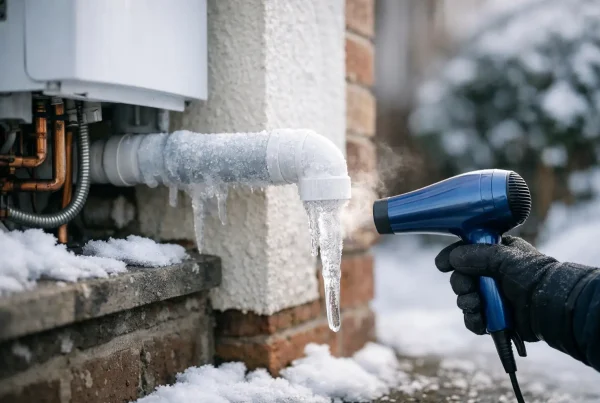
Frozen condensate pipes tend to show up in colder weather. The boiler may lock out and stop working altogether. In some cases the pipe can be thawed safely and the system reset, but repeated freezing may point to poor pipe routing or insulation that needs sorting properly.
Then there are circulation problems. If radiators are cold in places, some rooms never seem to warm up, or the boiler cycles on and off too often, the fault might not be the boiler alone. Sludge in the system, a weak pump, airlocks, stuck valves, or thermostat issues can all affect performance.
When boiler repairs in Leeds need urgent attention
Some faults are inconvenient. Others are urgent. Knowing the difference matters.
If you smell gas, suspect a gas leak, or think there may be fumes or carbon monoxide issues, do not try to investigate it yourself. Turn the appliance off if safe to do so, open windows, avoid switches or naked flames, and get emergency help straight away. The same applies if you see scorching around the boiler, hear unusual banging combined with shutdowns, or notice a yellow flame where there should be a crisp blue one.
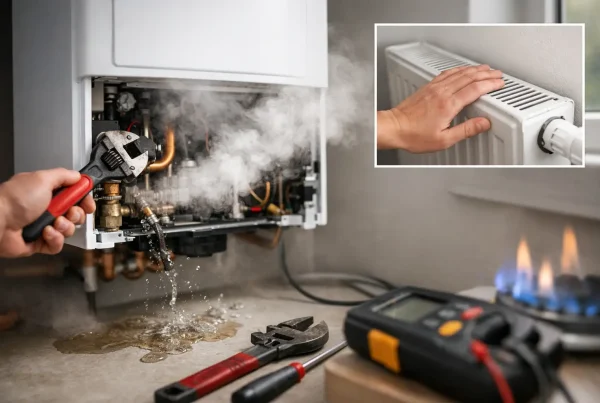
A leak from the boiler also needs quick attention. Even a small drip can damage components, wiring, and nearby flooring or cupboards. Left long enough, water ingress can turn a repairable problem into a bigger and more expensive one.
For landlords, urgency is not just about convenience. Heating and hot water faults affect tenants directly, and gas safety obligations do not leave much room for delay. A reliable local engineer matters because tenants expect action fast, especially in colder months.
What a good boiler repair service should actually do
Good repair work starts with diagnosis, not assumptions. Swapping parts without proper testing wastes time and money. A competent engineer should check the full picture – the boiler, controls, pressure, gas rate where needed, circulation, and any obvious system issues that could be contributing to the fault.
You should also get a straightforward explanation. Not technical waffle. Just the fault, the repair needed, the likely cost, and whether there is anything else worth keeping an eye on. If a boiler is older and parts are becoming harder to source, that should be said clearly. If the repair is sensible and the boiler has life left in it, that should be said too.
This is where local experience helps. An engineer working across Leeds will already know the kinds of systems fitted in different properties, from older terraces with ageing heating setups to newer homes with combi boilers and smart controls. That speeds up diagnosis and usually means fewer return visits.
Repair or replace?
This is the question most people ask once a boiler starts playing up. The honest answer is that it depends on the age of the boiler, the cost of the repair, how often it has broken down before, and whether the rest of the heating system is in decent shape.
If the fault is isolated and the boiler has generally been reliable, repair is often the sensible option. A failed pump, fan, pressure sensor, or diverter valve can usually be sorted without turning the whole situation into a major decision.
If the boiler is older, inefficient, and breaking down more than once, repair becomes harder to justify. The cheapest repair is not always the cheapest route overall. Paying for callout after callout on an unreliable boiler soon adds up, especially if you are still left with high running costs and the risk of another breakdown next month.
Landlords tend to look at this more practically, and rightly so. Reliability matters because void periods, complaints, and repeat visits all cost money. Homeowners often look at the same issue from a comfort point of view. They want to know the heating will stay on through winter without constant worry. Both approaches are valid.
The hidden cause behind repeat callouts
Sometimes the boiler is not the whole problem. That is why repeat faults can keep happening even after a part has been changed.
Dirty system water is a common example. If the central heating system is full of sludge and debris, it puts extra strain on pumps, heat exchangers and valves. You can repair the immediate fault, but unless the system condition is checked, the new part may end up working in poor conditions from day one.
Controls are another one. Faulty thermostats, timers, motorised valves and wiring problems can all mimic boiler failure. So can issues with radiators, balancing, or poor circulation. A proper repair service should look beyond the obvious and make sure the whole heating system is working as it should.
That matters because customers are not really paying for a part. They are paying for a reliable result.
How to avoid boiler breakdowns in the first place
Not every breakdown can be prevented, but a lot of them can. Annual servicing is still the best way to catch wear and tear early, check safety, clean key components where needed, and keep the boiler running efficiently.
It also helps to deal with small warning signs before they become bigger faults. If the pressure drops every few weeks, if the boiler starts making new noises, or if hot water turns unreliable, do not leave it until the system stops completely. Early attention usually means a simpler repair.
Keeping the rest of the system in good order matters too. Radiators that need bleeding, cold spots, stuck valves, and poor heating performance can all signal wider system issues. Fixing those problems early helps protect the boiler as well.
Choosing the right company for boiler repairs in Leeds
When you are cold and without hot water, it is tempting to ring the first number you see. But this is one area where trust counts. You want a Gas Safe engineer, clear communication, proper fault finding, and someone who can deal with the wider heating or plumbing issue if it turns out not to be the boiler alone.
That is why many households prefer a local company rather than trying to juggle separate trades. If the fault leads to a wider heating issue, a leaking pipe, a radiator problem, or a control upgrade, it is easier when one team can handle the lot. GasPlumb works in exactly that practical, no-fuss way – repair what is wrong, explain what is needed, and get the home back to normal as quickly as possible.
Price matters, of course, but so does doing the job once and doing it properly. The cheapest callout can become expensive if the diagnosis is wrong or the repair does not hold. Fast response, sound workmanship and honest advice are usually what save money in the long run.
If your boiler has stopped working, is leaking, losing pressure or showing fault codes, the best next step is simple. Get it checked properly before the problem gets worse. A dependable local repair can mean the difference between a straightforward fix today and a much bigger heating headache tomorrow.
When the heating goes off, people do not need sales talk. They need someone who turns up, finds the fault, and sorts it. That is what good boiler repair should feel like.